The Doctor Who Brought Water to the Desert: When Tetsu Nakamura Traded His Stethoscope for a Shovel
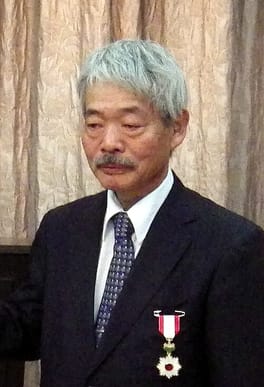
A doctor's job is to examine the sick, prescribe medicine, and heal wounds. Most of us believe that without question, and Tetsu Nakamura began his career from exactly that conviction.
And then he broke from it in the most profound way imaginable. The man who once held a stethoscope eventually picked up a shovel, climbed onto heavy machinery, and dug irrigation canals across the parched earth of Afghanistan. Why? The answer is simple and crushingly heavy: he had realized that bringing water saved more lives than treating illness ever could.
This is the story of a physician born in Fukuoka City who walked out of the examination room, into the wasteland, and turned that wasteland green.
From Fukuoka to the Farthest Place
Tetsu Nakamura was born on September 15, 1946, in Fukuoka City. He studied at Fukuoka Prefectural Fukuoka High School and then Kyushu University before becoming a doctor. On paper, an easy and respected life lay open before him: a comfortable practice back home, patients to see, a family to support, a dignified career.
Instead, he went to the opposite of all that. He chose the harsh borderlands of Pakistan and Afghanistan, a land of sand, rock, and mountains, scarce in both medicine and water. Supported by the NGO Peshawar-kai, he committed himself to practicing medicine in that brutal terrain, quietly letting go of the easier road.
The Other Sickness He Saw in the Clinic
As he kept treating patients, Nakamura ran into a hard truth: what was killing the people in front of him was often not something medicine could fix.
There was no clean water. Crops would not grow. There was nothing to eat. The dry land itself was slowly taking lives. No matter how much medicine he handed out, people kept collapsing as long as the underlying thirst went unanswered. One doctor can only see so many patients in a day. Faced with that wall, Nakamura refused to stop.
A Physician Digs a Canal
So he made a decision that went far beyond the bounds of medicine: he would dig irrigation canals.
A doctor, taking up civil engineering. By conventional logic it was reckless, even faintly absurd. But Nakamura was deadly serious. He channeled water into the dry ground of Afghanistan, transforming barren land into farmland. Crops grew where nothing had grown, and people could live there again. The lives he could not save with a stethoscope, he set out to save with a canal. The leap of imagination was enormous; the execution was relentlessly humble.
More Than Awards: A Single Stream Reaching a Field
The world took notice. In 2003 he received the Ramon Magsaysay Award, often called Asia's Nobel Prize. In 2013 came the Kikuchi Kan Prize and the Fukuoka Asian Culture Prize; in 2014, the Shiroyama Saburo Prize; in 2016, the Order of the Rising Sun, Gold and Silver Rays; and in 2019, the Order of the Rising Sun, Gold Rays with Rosette.
Even surrounded by such honors, he was likely unmoved. What truly gladdened him was surely not the words on a certificate, but the sight of water flowing into a once-dead field and green returning to it. Awards were a result, never the goal.
The Gunfire, and What Remained
On December 4, 2019, Tetsu Nakamura was shot and killed in Afghanistan. He was 73. A man who had saved so many lives and turned wasteland green, struck down by gunfire on that very soil — there is no word for it but senseless.
Yet the work he carved into the earth did not vanish. The water he drew still flows; the land he made green still feeds people. One doctor's conviction rewrote the very shape of the land.
Tetsu Nakamura redefined, more broadly than almost anyone, the question of what a doctor is. He did not merely treat disease; he severed the roots that bred it, calmly stepping past the boundaries of his profession to do so.
Few people deserve the phrase "humbling" as much as he does. The water he led across that dry land will go on telling his name, for as long as it flows.