On Screen Since the Day Television Was Born: The Miracle of Tetsuko Kuroyanagi
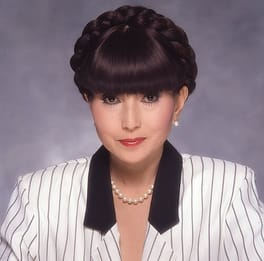
Television broadcasting began in Japan on February 1, 1953. On that very first day, a young actress appeared on the screen — and astonishingly, she is still standing at the center of that screen today. Her name is Tetsuko Kuroyanagi, and you would struggle to find a Japanese person who does not know it.
Her career began as the very first television actress under exclusive contract with NHK, and more than seventy years later it shows no sign of stopping. Her talk show Tetsuko's Room holds a Guinness World Record, and her memoir Totto-chan: The Little Girl at the Window has sold over 25 million copies worldwide. Charm and grit, curiosity and an unbending core — she has carried all these contradictions effortlessly while living through the whole of postwar Japan.
A "Strange Child" Born Into a House of Music
She was born on August 9, 1933, in Akasaka, Tokyo. Her father, Moritsuna Kuroyanagi, was a violinist who served as concertmaster of the orchestra that would become the NHK Symphony Orchestra; her mother, Cho, was an essayist. It was a home filled with sound and words.
As a girl, Tetsuko was a bundle of curiosity. She would open and close the lid of her school desk endlessly and grow transfixed by the street musicians outside the window. A conventional elementary school found her "unmanageable," and she was made to transfer. But that new school was Tomoe Gakuen — the very place that would one day move readers around the world to tears. Its free-spirited classrooms, built inside old railway carriages, protected and nurtured her wide-open way of seeing the world.
The First Resident of a New World Called Television
After graduating from the vocal music department of Toyo Music School (now Tokyo College of Music), she passed the audition for the NHK Broadcasting Drama Company in 1953. That same year, on the very first day Japanese television came to life, she was already on the screen.
It was an era when no one yet knew what television was supposed to be. Her fast-talking, free-flowing personality was, at first, almost too much to handle. Yet by 1958 she was chosen to host the Red Team of the 9th NHK Kohaku Uta Gassen, and she steadily rose to become a fixture in living rooms across the country. In 1965 she even traveled to New York to study acting anew at the legendary Actors Studio — a measure of her relentless hunger to grow.
A Talk Show That Has Run for Half a Century
In 1976, Tetsuko's Room premiered on TV Asahi — the first talk show in Japan hosted by a single woman. Ever since, she has kept the program running entirely on her own.
She draws out the very best in her guests more naturally than anyone. She talks quickly and freely, yet never overshadows the person across from her. Half a century of observing human beings lives inside that exquisite sense of timing. In 2011, the show reached 8,961 episodes and was certified by Guinness World Records — the most episodes of a talk show hosted by the same presenter. More than a record, it is proof of an entire era.
Totto-chan Traveled the World
In 1981 she published her autobiographical book, Totto-chan: The Little Girl at the Window. Describing her girlhood at Tomoe Gakuen with that same free, honest gaze, the book sold explosively in Japan and was eventually translated into languages around the globe. With more than 25 million copies in print, it holds the Guinness World Record for the best-selling autobiography.
Then in 2023, forty-two years later, she released a sequel, Totto-chan: The Little Girl at the Window Continued. At ninety years old, she still had stories to tell and had lost none of her power to tell them. That fact alone is something close to a miracle.
Walking On for the Children
In 1984 she became a UNICEF Goodwill Ambassador — the first person from Asia chosen for the role. Since then she has traveled to the front lines of conflict and famine, carrying the voices of the world's children back to Japan.
She transformed her fame as an entertainer into a calling. The first UNICEF Child Survival Award in 1985, the Order of the Sacred Treasure in 2003, Honorary Citizen of Tokyo in 2017 — the honors lined up beside her name speak not only of glamour on screen but of the weight of action quietly built up over decades.
A woman who has been on the screen since the day television was born — and who still gazes at the world with the curiosity of a child. Tetsuko Kuroyanagi is a woman of records and, just as much, a woman of memory.
Beneath that onion-shaped wig lives the entire history of Japanese show business — and that is hardly an exaggeration. That she is still here, at the center of the screen, is for all of us nothing less than the greatest good fortune.