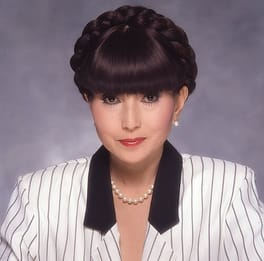
Photo: 大臣官房人事課 / CC BY 4.0 (source: Wikimedia Commons)
My Take
Okay, let me just say it: Tetsuko Kuroyanagi is a legend in the most literal sense. She was on Japanese TV the day Japanese TV basically started in 1953, and she's STILL going. "Tetsuko's Room" has run since 1976 with her as the sole host, and yes, that Guinness record is real. I'm endlessly charmed by the contradiction of her: machine-gun fast talker, total chatterbox, yet somehow she always pulls the best, most honest moment out of whoever's sitting across from her. And "Totto-chan"? A memoir that sold over 25 million copies because that wide-open, fearless kid's-eye view never left her. Decades as a UNICEF ambassador, the onion-shaped hair, the bottomless curiosity. She's basically a national treasure who refuses to act her age, and I love her for it.
This take was written by generative AI, one per person, from publicly reported facts (editorial policy). It is a reading of the record, not reporting.
Story
On Screen Since the Day Television Was Born: The Miracle of Tetsuko Kuroyanagi
Overview
Tetsuko Kuroyanagi was born on August 9, 1933, in Akasaka, Tokyo (formerly Nogizaka, Akasaka Ward, Tokyo City). She joined the NHK Broadcasting Drama Company in 1953 and appeared on television on the very first day of broadcasting in Japan, becoming the first exclusive television actress contracted to NHK. Since 1976 she has hosted the long-running talk show Tetsuko's Room on TV Asahi, earning a Guinness World Record for the most episodes of a talk show hosted by the same presenter, while her 1981 autobiographical book Totto-chan: The Little Girl at the Window became an international bestseller. She was appointed UNICEF Goodwill Ambassador in 1984, the first person from Asia to hold that role.
1. Profile
- Name (English)
- Tetsuko Kuroyanagi
- Name (Japanese)
- 黒柳徹子
- Reading
- くろやなぎ てつこ
- Born
- August 9, 1933 (age 93)
- Origin
- Akasaka, Minato, Tokyo, Japan
- Height
- 163 cm
- Occupation
- Actress / Talent / Television Host / Essayist / UNICEF Goodwill Ambassador
- Zodiac / Chinese zodiac
- Leo / Rooster
- Blood type
- A
- Agency
- Yoshida Naomi Office
- Active years
- 1953–present
2. Background
- Elementary school
- Jiyugaoka Gakuen Elementary School (transferred) → Tomoe Gakuen
- Junior high
- Koran Girls' School Junior High School
- High school
- Koran Girls' School Senior High School
- University
- Toyo Music School (now Tokyo College of Music), Department of Vocal Music
- Debut
- In 1953, she joined the NHK Broadcasting Drama Company and appeared on television on the first day of broadcasting in Japan (February 1, 1953), becoming NHK's first exclusively contracted television actress.
Awards & achievements
- 1961 Japan Broadcasting Writers' Association Award – Female Performer Award (1st)
- 1981 Robo no Ishi Literary Award (Totto-chan: The Little Girl at the Window)
- 1985 UNICEF Child Survival Award (1st)
- 1997 38th Mainichi Art Award
- 1997 4th Yomiuri Theatre Award – Grand Prize and Best Actress
- 2000 UNICEF Leadership Award for Children (1st)
- 2003 Order of the Sacred Treasure, 3rd Class (now Order of the Sacred Treasure, Gold Rays with Neck Ribbon)
- 2006 54th Kikuchi Kan Prize (Tetsuko's Room)
- 2011 Guinness World Record – Most episodes of a talk show hosted by the same presenter
- 2017 Honorary Citizen of Tokyo
Timeline
- 1953Joined NHK Broadcasting Drama Company; appeared on television on Japan's first broadcast day (February 1); became NHK's first exclusively contracted television actress
- 1958Served as the Red Team host of the 9th NHK Kohaku Uta Gassen
- 1965Studied in New York (including at the Actors Studio)
- 1976Tetsuko's Room began airing on TV Asahi; Japan's first talk show hosted by a woman
- 1981Published autobiographical book Totto-chan: The Little Girl at the Window; became a major bestseller in Japan and abroad
- 1984Appointed UNICEF Goodwill Ambassador; first person from Asia to hold the role
- 2011Tetsuko's Room reached 8,961 episodes and was certified by Guinness World Records
- 2013Elected a member of the Japan Art Academy
- 2021Launched official YouTube channel 'Tetsuko no Kimagure TV'
- 2023Published Totto-chan: The Little Girl at the Window Continued, 42 years after the original
3. Relationships
- Spouse
- Never married
- Parents
- Father: Moritsuna Kuroyanagi (violinist, concertmaster of the predecessor of the NHK Symphony Orchestra); Mother: Cho Kuroyanagi (essayist)
- Siblings
- Younger brother: Noriaki Kuroyanagi (violinist); younger sister: Mari Kuroyanagi (essayist and former ballerina); younger brother: Meiji Kuroyanagi (died in infancy)
4. Personality
Hobbies
- Travel
Specialties
- Vocal music
- Acting
- Dance
5. Works & records
Works summary
- Appearances
- 160 (1954–2026)
- By year
- 1954: 2, 1955: 1, 1956: 1, 1957: 1, 1960: 1, 1961: 3, 1962: 3, 1963: 2, 1964: 1, 1965: 2, 1966: 3, 1967: 5, 1968: 4, 1969: 7, 1970: 4, 1971: 2, 1972: 2, 1973: 2, 1974: 6, 1975: 3, 1977: 6, 1978: 2, 1979: 2, 1980: 1, 1984: 1, 1986: 1, 1987: 2, 1989: 4, 1990: 1, 1991: 1, 1992: 2, 1993: 1, 1994: 1, 1995: 2, 1996: 1, 1997: 1, 1999: 3, 2001: 2, 2002: 1, 2003: 2, 2004: 1, 2005: 1, 2006: 2, 2007: 2, 2008: 1, 2009: 4, 2010: 1, 2011: 3, 2012: 7, 2013: 5, 2014: 3, 2015: 1, 2016: 4, 2019: 2, 2020: 4, 2021: 3, 2022: 2, 2024: 2, 2026: 1
- Debut work
- 高瀬の馬鹿三里
Filmography / notable works
| Category | Title | Role | Year |
|---|---|---|---|
| Television | Tetsuko's Room | Host | 1976 |
| Book | Totto-chan: The Little Girl at the Window | Author | 1981 |
| Television | The Best Ten | Co-host | 1978 |
| Television | NHK Kohaku Uta Gassen | Red Team Host | 1958 |
| Book | Totto-chan: The Little Girl at the Window Continued | Author | 2023 |
| Stage | Master Class | Lead | 1997 |
| Stage | Shiawase no Sei Kurabe | Lead | 1997 |
6. Links
- Official sitehttps://totto-chan.jp/
- Instagramhttps://www.instagram.com/tetsukokuroyanagi/
- YouTubehttps://www.youtube.com/channel/UCHTWjXIgA8A_jZxqDasNZTA
- Wikipedia (Japanese)https://ja.wikipedia.org/wiki/%E9%BB%92%E6%9F%B3%E5%BE%B9%E5%AD%90
- Wikidatahttps://www.wikidata.org/wiki/Q466963
7. About this entry
Tags
- Last updated
Facts are limited to publicly available information up to 2024; non-public or unconfirmed items are omitted. Works and profile fields sourced from Wikipedia reflect content as of 2026-08-26. English text is machine-assisted (facts translated by Sonnet, "My Take" written by Opus 4.8). The Japanese page is the source of record.
Frequently asked questions
When was Tetsuko Kuroyanagi born?
Born August 9, 1933 (age 93).
Where is Tetsuko Kuroyanagi from?
Tetsuko Kuroyanagi is from Akasaka, Minato, Tokyo, Japan.
What does Tetsuko Kuroyanagi do?
Tetsuko Kuroyanagi works as Actress, Talent, Television Host, Essayist, UNICEF Goodwill Ambassador.
How tall is Tetsuko Kuroyanagi?
Tetsuko Kuroyanagi is 163 cm.
What is Tetsuko Kuroyanagi's blood type?
A.
What agency is Tetsuko Kuroyanagi with?
Tetsuko Kuroyanagi is with Yoshida Naomi Office.
How long has Tetsuko Kuroyanagi been active?
1953–present.
What is Tetsuko Kuroyanagi known for?
Notable works include Tetsuko's Room, Totto-chan: The Little Girl at the Window, The Best Ten.
Actress — see all → · Talent — see all → · More people from Japan →