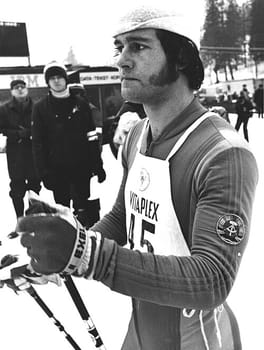
Photo: Paul Andreas Røstad / DEXTRA Photo / CC BY-SA 4.0 (source: Wikimedia Commons)
Born on July 8, 1952 in Halle (Saale), Saxony-Anhalt, Germany, Ulrich Wehling is a Nordic combined skier. Ulrich Wehling is 74 years old as of 2026. Awards on record include Patriotic Order of Merit in Gold, Holmenkollen Medal (1976) and Bronze Olympic Order (1982). The listed height is 183 cm.
My Take
Ulrich Wehling sits in rare company. Three straight Olympic golds in nordic combined, in 1972, 1976, and 1980, is a feat I struggle to overstate, and being the first man to win three consecutive titles in a single Winter event cements his place in history. Nordic combined fuses two opposing disciplines, ski jumping and cross-country, so dominating it across nearly a decade speaks to extraordinary self-mastery. The 1976 Holmenkollen Medal only underlines the reverence he earned. I am drawn less to the medal count than to the relentless consistency behind it; that, to me, is the mark of a true champion.
This take was written by generative AI, one per person, from publicly reported facts (editorial policy). It is a reading of the record, not reporting.
1. Profile
- Name (English)
- Ulrich Wehling
- Name (Japanese)
- ウルリヒ・ベーリンク
- Reading
- うるりひ・べーりんく
- Born
- July 8, 1952 (age 74)
- Origin
- Halle (Saale), Saxony-Anhalt, Germany
- Height
- 183 cm
- Occupation
- Nordic combined skier
- Zodiac / Chinese zodiac
- Cancer / Dragon
2. Background
Awards & achievements
- Patriotic Order of Merit in Gold
- 1976 Holmenkollen Medal
- 1982 Bronze Olympic Order
3. Links
4. About this entry
Tags
- Last updated
Facts are limited to publicly available information up to 2024; non-public or unconfirmed items are omitted. English text is machine-assisted (facts translated by Sonnet, "My Take" written by Opus 4.8). The Japanese page is the source of record.
Frequently asked questions
When was Ulrich Wehling born?
Born July 8, 1952 (age 74).
Where is Ulrich Wehling from?
Ulrich Wehling is from Halle (Saale), Saxony-Anhalt, Germany.
What does Ulrich Wehling do?
Ulrich Wehling works as Nordic combined skier.
How tall is Ulrich Wehling?
Ulrich Wehling is 183 cm.