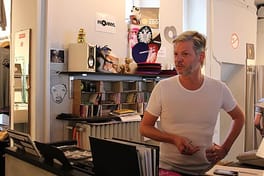
Photo: Alec Luhn / CC BY 2.0 (source: Wikimedia Commons)
Wolfgang Voigt is credited as a record producer, electronic musician and disc jockey. Awards on record include Holger Czukay Pop Music Prize of the City of Cologne (2019).
My Take
Voigt is, to me, one of electronic music's true architects rather than just a producer. Working under aliases like Gas, he helped define minimal techno and, crucially, co-founded Kompakt, building the very infrastructure a whole Cologne scene grew on. Passing through labels like Warp and Raster-Noton while also working as a photographer signals a layered, restless sensibility I find rare. His sound is not about hooks; it is ambient, fog-like, shaping atmosphere itself. The 2019 hometown music prize feels like overdue civic acknowledgment. I have a deep fondness for artists who change a genre quietly, from the structural level, and Voigt has done exactly that for decades.
This take was written by generative AI, one per person, from publicly reported facts (editorial policy). It is a reading of the record, not reporting.
1. Profile
- Name (English)
- Wolfgang Voigt
- Name (Japanese)
- ウォルフガング・ヴォイト
- Reading
- うぉるふがんぐ・ゔぉいと
- Born
- 1961
- Origin
- Cologne, North Rhine-Westphalia, Germany
- Occupation
- record producer / electronic musician / disc jockey / photographer / composer
- Zodiac / Chinese zodiac
- Ox
2. Background
Awards & achievements
- 2019 Holger Czukay Pop Music Prize of the City of Cologne
3. Links
- Official sitehttps://www.wolfgang-voigt.com
- Wikipedia (English)https://en.wikipedia.org/wiki/Wolfgang%20Voigt
- Wikipedia (Japanese)https://ja.wikipedia.org/wiki/%E3%82%A6%E3%82%A9%E3%83%AB%E3%83%95%E3%82%AC%E3%83%B3%E3%82%B0%E3%83%BB%E3%83%B4%E3%82%A9%E3%82%A4%E3%83%88
- Wikidatahttps://www.wikidata.org/wiki/Q85367
4. About this entry
Tags
- Last updated
Facts are limited to publicly available information up to 2024; non-public or unconfirmed items are omitted. English text is machine-assisted (facts translated by Sonnet, "My Take" written by Opus 4.8). The Japanese page is the source of record.
Frequently asked questions
Where is Wolfgang Voigt from?
Wolfgang Voigt is from Cologne, North Rhine-Westphalia, Germany.
What does Wolfgang Voigt do?
Wolfgang Voigt works as record producer, electronic musician, disc jockey, photographer, composer.