The Screen Bent Toward Him: Yujiro Ishihara, the Man Who Became the Sun
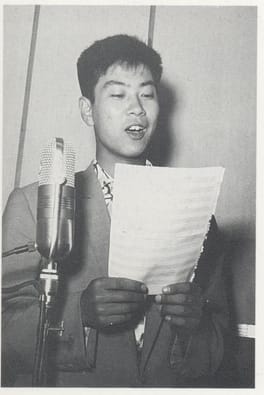
In the Japanese cinema of the 1950s, a young man appeared unlike anyone audiences had seen before. One hundred and seventy-eight centimeters tall, long-legged, with a smoky singing voice and, above all, a presence that made him the center of any frame simply by standing in it. This was Yujiro Ishihara, postwar Japan's first true superstar.
His arrival was more than the debut of a new actor. It was the moment a restless postwar youth found someone to speak for them. Driving sports cars, sailing yachts, free of inherited values, he became the very emblem of a new generation, the so-called "Taiyozoku" or Sun Tribe, carrying the spirit of an entire era onto the screen.
Actor, singer, entrepreneur. He played every part and made each look effortless. He came roaring back from surgery with a reported survival rate of three percent, and even after his death at the cruelly early age of 52, his legend endures.
A Legend Born From a Brother's Novel
Yujiro Ishihara was born in 1934 in Kobe, Hyogo. His father worked for the Yamashita Kisen shipping company, and the family lived in Otaru and Zushi. His elder brother, Shintaro Ishihara, would become a famous author and politician. Yujiro enrolled in the Faculty of Law at Keio University, but his entrance into show business came from an unexpected direction.
When his brother's novel Season of the Sun was adapted for film, Yujiro was cast on the recommendation of producer Takiko Mizunoe and his brother. His 1956 debut was a minor role, but that same year he landed the lead in Crazed Fruit and even made his singing debut. He dropped out of university and threw himself into Nikkatsu, his talent discovered by the studio producer Takiko Mizunoe.
The Man Who Made the Storm
In 1957, the year after his debut, Ishihara rocketed to stardom. I Am Waiting and Arashi wo Yobu Otoko became back-to-back hits, and he won the 8th Blue Ribbon Award for Best New Actor, his name now known across the country.
His appeal was never just one thing. Singing, he melted hearts with that smoky voice; in action, he was sharp and dashing. He was a hard-boiled leading man with something boyishly likable about him. Songs like "Ginza no Koi no Monogatari," "Yogiri yo Konya mo Arigatou," and "Brandy Glass" outgrew the status of an actor's side hobby and survived as classics of Showa popular music. In 1960 he married the actress Mie Kitahara, later known as Makiko Ishihara, his co-star in many films.
Building His Own Castle: Ishihara Productions
Not content merely to remain a star, Ishihara pushed further. In 1963 he founded his own production company, Ishihara Productions, determined to make the films he wanted with his own hands. Its first work, Alone on the Pacific, won the National Arts Festival Award. With ambitious projects such as Black Sun, co-produced with Toshiro Mifune, his work as a producer expanded the very scale of Japanese cinema.
Before long his stage shifted to television. As the "Boss," Shunsuke Todo, in Taiyo ni Hoero! from 1972, and as Kenzo Kogure in Nishi-bu Keisatsu from 1979, he reigned as a hero of the living room as well. As actor, singer, and businessman, he never stayed confined to a single place.
A Return From Three Percent
In 1981, the greatest drama of his life unfolded in reality. During location filming for Nishi-bu Keisatsu, Ishihara suffered a dissecting aortic aneurysm. He underwent major surgery at Keio Hospital, where his survival rate was reportedly just three percent.
It was a battle harsher than any his on-screen heroes ever faced. And he survived, against the odds. The whole nation celebrated what it called a miraculous comeback. This unscripted true story may have been the greatest climax of his cinematic life, rivaling any scene he ever played.
But fate would not grant him much more time. On July 17, 1987, Yujiro Ishihara died of hepatocellular carcinoma at the age of 52, a parting far too soon.
In 2000, a Kinema Junpo survey of the great movie stars of the twentieth century ranked him second among Japanese male actors. More than a decade after his death, his brilliance had not faded. From that day in the 1950s when the screen first bent toward him, more than half a century on, the sun named Yujiro Ishihara still shines over the Showa era.