The Woman Who Sealed the Seasons into Song: Fifty Years of Yumi Matsutoya
When winter comes, everyone is humming it: "Koibito ga Santa Claus." Head to a ski slope and her songs are forever drifting across the snow. As spring nears, "Haru yo, Koi" begins to sound softly somewhere in the chest.
You could be forgiven for thinking she wrote half of Japan's four seasons—that is how deeply the music of Yumi Matsutoya is woven into daily life here. Arai Yumi, and then Yuming. The name changed, but the gift for sealing the very scent of a season into a song never faded across half a century.
This is the story of how an art student from Hachioji became Japanese pop music itself.
The Art Student from Hachioji
Yumi Matsutoya was born on January 19, 1954, in Hachioji, Tokyo. After attending Rikkyo Jogakuin High School, she majored in Japanese painting at Tama Art University's Faculty of Fine Arts. A sensibility steeped in painting as well as music would later feed the vivid imagery her lyrics conjure.
By 1971, she was already working as a professional composer. Before she ever stepped into the spotlight, she was, first and foremost, a writer of songs.
The Arrival of Yumi Arai
In 1972, she made her debut as a singer under the name Yumi Arai with the single "Henji wa Iranai." The following year, 1973, she released her first album, "Hikouki Gumo." Combining clear lyricism with an urbane sensibility, the music brought in a wind utterly unlike the popular songs that had come before.
In 1975, "Ano Hi ni Kaeritai" won her the Lyricist Award at the Japan Record Awards. Through her, the very idea of the singer-songwriter began to take on a firm shape in Japan.
Becoming Yumi Matsutoya
In 1976, she married music arranger and producer Masataka Matsutoya and changed her name to Yumi Matsutoya. That same year she released the album "Juyonbanme no Tsuki."
Alongside a husband who was both her life partner and her finest musical collaborator, the world of her work grew ever richer. From Arai Yumi to Matsutoya Yumi: the name changed, but the essence—her power to carve the nuances of season and heart into song—held firm.
Two Million Copies and the Age of "Yuming"
In 1990, the album "Tengoku no Tobira" became the first by a Japanese artist to ship over two million copies. "Koibito ga Santa Claus," "Mamotte Agetai," "Haru yo, Koi"—her songs had grown beyond personal works into the very seasonal memory of the Japanese people.
And she was never merely a singer. From stage direction to costumes, she involved herself deeply, mounting astonishing shows each time out. That almost ravenous appetite for expression is what made "Yuming" something singular and unrepeatable.
Half a Century, and a Guinness World Record
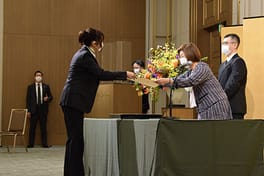
She received the Medal with Purple Ribbon and the Iwatani Tokiko Award in 2013, the Kikuchi Kan Award in 2018, and was designated a Person of Cultural Merit in 2022. That same year she released the 50th-anniversary best album "Yuming Banzai!"
In 2023, her feat of topping the Oricon album chart across six consecutive decades was certified as a Guinness World Record. Her total sales exceed forty million copies. Never pandering to trends, never settling into the role of a nostalgia act, she simply kept on being "Yuming"—and that upright stance is what produced the record.
Half a century has passed since she debuted as Arai Yumi, and through it all she has stayed on the front line, singing. That alone seems beyond ordinary human achievement.
Every time the seasons turn, we meet her songs somewhere—on a winter street corner, in a corner of the heart waiting for spring. Yumi Matsutoya will surely keep on sounding through our four seasons for years to come.