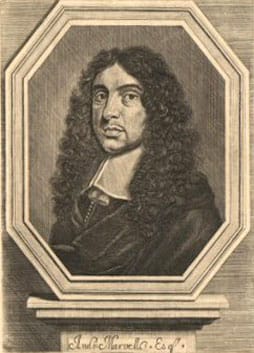
Photo: Unknown author / Public domain (source: Wikimedia Commons)
Andrew Marvell, born on March 31, 1621 in Winestead, United Kingdom, was a poet, politician and writer. Andrew Marvell died on August 16, 1678, aged 57. Education on record includes Trinity College. Credited works include Horatian Ode upon Cromwell’s Return from Ireland.
My Take
Marvell fascinates me as a true double life made coherent: a poet of rare subtlety who also sat in Parliament and counted Milton as a friend. His Horatian Ode on Cromwell still divides scholars over whether it praises or punctures its subject, and that ambiguity is precisely its genius. I hesitate to pronounce on a man four centuries gone, yet I find his blend of lyric grace and biting satire wonderfully alive. He used language both to flatter and to skewer power, and lived in the messy overlap of art and politics. To me, that refusal of tidy categories is exactly what keeps him magnetic.
This take was written by generative AI, one per person, from publicly reported facts (editorial policy). It is a reading of the record, not reporting.
1. Profile
- Name (English)
- Andrew Marvell
- Name (Japanese)
- アンドルー・マーヴェル
- Reading
- あんどるー・まーゔぇる
- Born
- March 31, 1621 – August 16, 1678
- Origin
- Winestead, United Kingdom
- Occupation
- poet / politician / writer / satirist
- Zodiac / Chinese zodiac
- Aries / Rooster
2. Background
- University
- Trinity College
3. Works & records
Filmography / notable works
| Category | Title |
|---|---|
| Notable work | Horatian Ode upon Cromwell’s Return from Ireland |
4. Links
5. About this entry
Tags
- Last updated
Facts are limited to publicly available information up to 2024; non-public or unconfirmed items are omitted. English text is machine-assisted (facts translated by Sonnet, "My Take" written by Opus 4.8). The Japanese page is the source of record.
Frequently asked questions
When was Andrew Marvell born?
Andrew Marvell was born on March 31, 1621.
When did Andrew Marvell die?
Andrew Marvell died on August 16, 1678, aged 57.
Where was Andrew Marvell from?
Andrew Marvell was from Winestead, United Kingdom.
What did Andrew Marvell do?
Andrew Marvell worked as poet, politician, writer, satirist.
Where did Andrew Marvell study?
Andrew Marvell attended Trinity College.
What was Andrew Marvell known for?
Andrew Marvell's notable works include Horatian Ode upon Cromwell’s Return from Ireland.
Poet — see all → · Politician — see all → · More people from the United Kingdom → · More people born on March 31 →