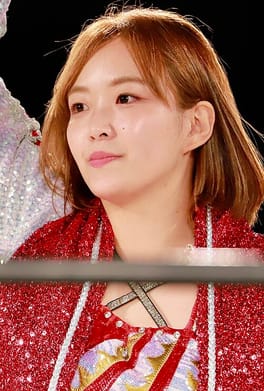
Photo: Yuzunet / CC BY-SA 4.0 (source: Wikimedia Commons)
My Take
I have a serious soft spot for Sareee, because she's the kind of wrestler who reminds you that joshi pro wrestling is built on grit, not gimmicks. Born in 1996 out of Itabashi, Tokyo, she carries herself with this old-school, strong-style toughness that feels way beyond her years, like she'd rather win you over with one brutally crisp dropkick than a flashy entrance. There's something so refreshingly head-on about her, no posturing, no shortcuts, just pure forward pressure. And after taking that Japanese fighting spirit overseas to WWE, she came home to freelance and now runs her own Sareee-ISM shows. I can't help rooting for her like a proud relative. She's the real deal, and I love that she lets the hits do the talking.
This take was written by generative AI, one per person, from publicly reported facts (editorial policy). It is a reading of the record, not reporting.
Overview
Sareee is a Japanese professional wrestler born on March 31, 1996, in Itabashi, Tokyo. Known for a hard-hitting, straightforward ring style, she built her career in Japanese women's professional wrestling before expanding to international stages. She competes under the ring name Sareee and maintains an active presence on social media.
1. Profile
- Name (English)
- Sareee
- Name (Japanese)
- Sareee
- Reading
- さりー
- Born
- March 31, 1996 (age 30)
- Origin
- Itabashi, Tokyo, Japan
- Occupation
- Professional Wrestler
- Zodiac / Chinese zodiac
- Aries / Rat
2. Links
- Instagramhttps://www.instagram.com/sarray_wwe/
- Xhttps://x.com/Sareee_official
- Wikipedia (Japanese)https://ja.wikipedia.org/wiki/Sareee
- Wikidatahttps://www.wikidata.org/wiki/Q11245514
3. About this entry
Tags
- Last updated
Only publicly available facts are listed; non-public or unconfirmed items are omitted. Base data was compiled from Wikidata from June 2026 onward; ages are recalculated daily and deaths are checked against Wikidata on an ongoing basis. English text is machine-assisted (facts translated by Sonnet, "My Take" written by Opus 4.8). The Japanese page is the source of record.
Frequently asked questions
When was Sareee born?
Sareee was born on March 31, 1996 and is 30 years old.
Where is Sareee from?
Sareee is from Itabashi, Tokyo, Japan.
What does Sareee do?
Sareee works as Professional Wrestler.
Professional Wrestler — see all → · More people from Japan → · More people born on March 31 →