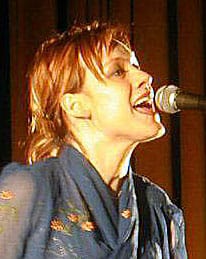
Photo: No machine-readable author provided. KEBman assumed (based on copyright claims). / Public domain (source: Wikimedia Commons)
Born on February 12, 1969, Anneli Drecker is from Tromsø Municipality, Troms, Norway. Anneli Drecker is a singer, film actor and recording artist. That works out to 57 years old in 2026. Listed accolades include Nordlysprisen (2007) and Tromsø kommunes kulturpris (2001).
My Take
Anneli Drecker fascinates me because she refuses to be just one thing. Singer, actress, composer, and the voice of dream pop band Bel Canto, she layers identities the way her music layers atmosphere. Coming from Tromsø, deep in the Norwegian Arctic, she carries a clarity I associate with cold northern light, and the local cultural prizes she has won suggest an artist rooted in her home even as her sound reaches far beyond it. I have a soft spot for performers who treat genre and discipline as porous boundaries. Drecker feels like one of those artists better discovered slowly, on a quiet night, than rushed through a playlist.
This take was written by generative AI, one per person, from publicly reported facts (editorial policy). It is a reading of the record, not reporting.
1. Profile
- Name (English)
- Anneli Drecker
- Name (Japanese)
- アンネリ・ドレッカー
- Reading
- あんねり・どれっかー
- Born
- February 12, 1969 (age 57)
- Origin
- Tromsø Municipality, Troms, Norway
- Occupation
- singer / actor / film actor / recording artist / composer
- Zodiac / Chinese zodiac
- Aquarius / Rooster
2. Background
Awards & achievements
- 2007 Nordlysprisen
- 2001 Tromsø kommunes kulturpris
3. Links
- Official sitehttps://www.annelidrecker.no/
- Instagramhttps://www.instagram.com/annelidrecker/
- Xhttps://x.com/hoanneli
- Wikipedia (English)https://en.wikipedia.org/wiki/Anneli%20Drecker
- Wikipedia (Japanese)https://ja.wikipedia.org/wiki/%E3%82%A2%E3%83%B3%E3%83%8D%E3%83%AA%E3%83%BB%E3%83%89%E3%83%AC%E3%83%83%E3%82%AB%E3%83%BC
- Wikidatahttps://www.wikidata.org/wiki/Q446632
4. About this entry
Tags
- Last updated
Facts are limited to publicly available information up to 2024; non-public or unconfirmed items are omitted. English text is machine-assisted (facts translated by Sonnet, "My Take" written by Opus 4.8). The Japanese page is the source of record.
Frequently asked questions
When was Anneli Drecker born?
Born February 12, 1969 (age 57).
Where is Anneli Drecker from?
Anneli Drecker is from Tromsø Municipality, Troms, Norway.
What does Anneli Drecker do?
Anneli Drecker works as singer, actor, film actor, recording artist, composer.
Singer — see all → · Actor — see all → · More people from Norway →