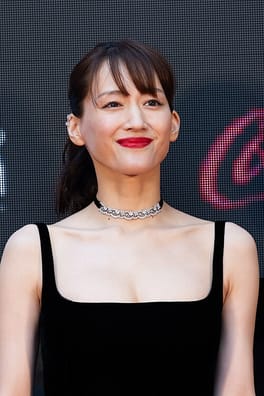
Photo: Dick Thomas Johnson from Tokyo, Japan / CC BY 2.0 (source: Wikimedia Commons)
My Take
Okay, Haruka Ayase is the rare actress who can look like a tragic porcelain heroine in one frame and say something so gloriously airheaded the next that you fall over laughing, and somehow both feel completely true. I love that she got scouted out of Hiroshima as a teenager and just quietly became one of Japan's most trusted faces, the kind of CM queen you can't get sick of because she never seems to be performing "celebrity" at you. What gets me, though, is the range: she'll do the daffy variety-show thing, then turn around and carry "JIN" or play a steely Yae in a Taiga drama with total conviction. There's a real spine under the softness. Beautiful but happy to look silly, prestige-drama heavy yet warm and goofy, she's just an easy person to root for.
This take was written by generative AI, one per person, from publicly reported facts (editorial policy). It is a reading of the record, not reporting.
Story
Beautiful, Yet Out to Make You Laugh: How a Hiroshima Girl Named Haruka Ayase Became a National Star
Overview
Haruka Ayase (born March 24, 1985, in Hiroshima) is a Japanese actress and singer affiliated with Horipro. She rose to prominence with the 2004 drama Sekai no Chushin de, Ai wo Sakebu and went on to star in acclaimed works including JIN and the NHK Taiga drama Yae no Sakura (2013). She has received multiple Japanese Academy Award nominations for Best Actress.
1. Profile
- Name (English)
- Haruka Ayase
- Name (Japanese)
- 綾瀬はるか
- Reading
- あやせ はるか
- Real name
- 蓼丸綾
- Born
- March 24, 1985 (age 41)
- Origin
- Asaminami Ward, Hiroshima, Japan
- Height
- 166 cm
- Occupation
- Actress / Singer
- Zodiac / Chinese zodiac
- Aries / Ox
- Blood type
- B
- Agency
- Horipro
- Active years
- 2001–present
2. Background
- High school
- Horikoshi High School
- Debut
- 2001, made her acting debut in the Nippon TV drama Kindaichi Shonen no Jikenbo
Awards & achievements
- 2009 Blue Ribbon Award for Best Actress (Oppai Baree)
- 2010 Japan Academy Prize for Outstanding Performance by an Actress in a Leading Role (Oppai Baree)
- 2015 Japan Academy Prize for Outstanding Performance by an Actress in a Leading Role (Our Little Sister)
- 2015 Mainichi Film Award for Best Actress (Our Little Sister)
- 2024 Japan Academy Prize for Outstanding Performance by an Actress in a Leading Role (Revolver Lily)
Timeline
- 2000Won Special Jury Prize at the Horipro Talent Scout Caravan and entered show business
- 2001Adopted stage name Haruka Ayase and made her acting debut
- 2004Cast as heroine in Sekai no Chushin de, Ai wo Sakebu, gaining wide recognition
- 2006Made singing debut with single "Period"
- 2009Played Saki Tachibana in the drama JIN; won the Blue Ribbon Award for Best Actress for the film Oppai Baree
- 2013Played protagonist Niijima Yae in NHK Taiga drama Yae no Sakura
- 2015Appeared in film Our Little Sister (Umimachi Diary), winning multiple awards
- 2023Starred in film Revolver Lily
3. Relationships
- Spouse
- Unmarried
4. Personality
Hobbies
- Cooking
- Walking
Specialties
- Tongue twisters
- Quick costume changes
- Sports in general
5. Works & records
Works summary
- Appearances
- 222 (2000–2026)
- By year (titles with a known year)
- 2000: 1, 2001: 2, 2002: 2, 2003: 2, 2004: 2, 2005: 5, 2006: 4, 2007: 4, 2008: 2, 2009: 2, 2010: 9, 2011: 4, 2012: 3, 2013: 2, 2014: 4, 2015: 6, 2016: 3, 2017: 3, 2018: 3, 2019: 7, 2020: 4, 2021: 12, 2022: 5, 2023: 4, 2024: 11, 2025: 8, 2026: 1, year unknown: 107
Filmography / notable works
| Category | Title | Role | Year |
|---|---|---|---|
| Drama | Sekai no Chushin de, Ai wo Sakebu | Heroine Aki Hirose | 2004 |
| Drama | Hotaru no Hikari | Lead – Hotaru | 2007 |
| Drama | JIN | Saki Tachibana | 2009 |
| Taiga Drama | Yae no Sakura | Lead – Niijima Yae | 2013 |
| Film | Oppai Baree | Lead (Mikako Terajima) | 2009 |
| Film | Our Little Sister (Umimachi Diary) | Koda Sachi | 2015 |
| Film | Revolver Lily | Lead | 2023 |
6. Links
- Official sitehttps://www.horipro.co.jp/ayaseharuka/
- Wikipedia (Japanese)https://ja.wikipedia.org/wiki/綾瀬はるか
- Wikidatahttps://www.wikidata.org/wiki/Q1206963
7. About this entry
Tags
- Last updated
Only publicly available facts are listed; non-public or unconfirmed items are omitted. Base data was compiled from Wikidata from June 2026 onward; ages are recalculated daily and deaths are checked against Wikidata on an ongoing basis. Works and profile fields sourced from Wikipedia reflect content as of 2026-08-26. English text is machine-assisted (facts translated by Sonnet, "My Take" written by Opus 4.8). The Japanese page is the source of record.
Frequently asked questions
When was Haruka Ayase born?
Haruka Ayase was born on March 24, 1985 and is 41 years old.
Where is Haruka Ayase from?
Haruka Ayase is from Asaminami Ward, Hiroshima, Japan.
What does Haruka Ayase do?
Haruka Ayase works as Actress, Singer.
How tall is Haruka Ayase?
Haruka Ayase is 166 cm tall.
What is Haruka Ayase's blood type?
Haruka Ayase's blood type is B.
Which high school did Haruka Ayase attend?
Haruka Ayase attended Horikoshi High School.
What agency is Haruka Ayase with?
Haruka Ayase is with Horipro.
How long has Haruka Ayase been active?
Haruka Ayase's recorded active years are 2001–present.
What is Haruka Ayase known for?
Haruka Ayase's notable works include Sekai no Chushin de, Ai wo Sakebu, Hotaru no Hikari, JIN.
Actress — see all → · Singer — see all → · More people from Japan → · More people born on March 24 →