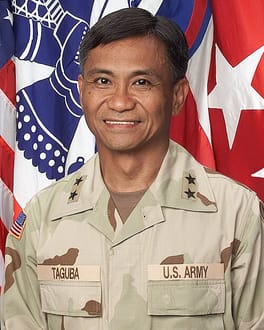
Photo: US Army photo / Public domain (source: Wikimedia Commons)
Born on October 31, 1950 in Manila, Philippines, Antonio Taguba is an executive officer. That puts Antonio Taguba at 75 years old in 2026. Education on record includes Leilehua High School and Naval War College. Listed accolades include Distinguished Service Medal and Legionnaire of Legion of Merit.
My Take
What draws me to Taguba is not the rank he reached, impressive as it was as only the second Philippine-born officer to make general in the U.S. Army, but the moral courage behind the report that bears his name. Documenting the abuses at Abu Ghraib from inside the institution was the kind of act that quietly ends careers, and he did it anyway. I find that far more compelling than any medal. To me he stands as proof that integrity written down at the right moment can outlast every other accomplishment, and that is exactly the sort of legacy I admire most.
This take was written by generative AI, one per person, from publicly reported facts (editorial policy). It is a reading of the record, not reporting.
1. Profile
- Name (English)
- Antonio Taguba
- Name (Japanese)
- アントニオ・タグーバ
- Reading
- あんとにお・たぐーば
- Born
- October 31, 1950 (age 75)
- Origin
- Manila, Philippines
- Occupation
- executive officer
- Zodiac / Chinese zodiac
- Scorpio / Tiger
2. Background
- High school
- Leilehua High School
- University
- Naval War College
Awards & achievements
- Distinguished Service Medal
- Legionnaire of Legion of Merit
3. Links
4. About this entry
Tags
- Last updated
Facts are limited to publicly available information up to 2024; non-public or unconfirmed items are omitted. English text is machine-assisted (facts translated by Sonnet, "My Take" written by Opus 4.8). The Japanese page is the source of record.
Frequently asked questions
When was Antonio Taguba born?
Born October 31, 1950 (age 75).
Where is Antonio Taguba from?
Antonio Taguba is from Manila, Philippines.
What does Antonio Taguba do?
Antonio Taguba works as executive officer.