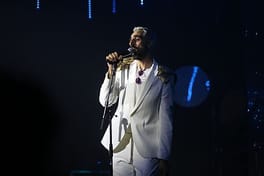
Photo: Yasmine Omari / CC BY-SA 4.0 (source: Wikimedia Commons)
Born on February 7, 1993, Bashar Murad is from Jerusalem. Public records list Bashar Murad as a singer. The age as of 2026 is 33.
My Take
Bashar Murad interests me because his art carries real stakes. As a Palestinian singer based in East Jerusalem, tackling gender norms and social expectations across the Middle East, he is doing something braver than entertainment. His collaboration with Iceland's Hatari, landing right after their pro-Palestinian gesture at Eurovision, showed how pop can become a banner and a shield at once. I'm drawn to artists who treat music as a question rather than a product, and Murad, born in 1993, represents a generation using their platform to push conversations many would rather avoid. He is someone I genuinely want to keep watching.
This take was written by generative AI, one per person, from publicly reported facts (editorial policy). It is a reading of the record, not reporting.
1. Profile
- Name (English)
- Bashar Murad
- Name (Japanese)
- バッシャール・ムラード
- Reading
- ばっしゃーる・むらーど
- Born
- February 7, 1993 (age 33)
- Origin
- Jerusalem
- Occupation
- singer
- Zodiac / Chinese zodiac
- Aquarius / Rooster
2. Links
- Official sitehttps://www.basharmurad.com/
- Instagramhttps://www.instagram.com/bashar234/
- Xhttps://x.com/Bashar__Murad
- Wikipedia (English)https://en.wikipedia.org/wiki/Bashar%20Murad
- Wikipedia (Japanese)https://ja.wikipedia.org/wiki/%E3%83%90%E3%83%83%E3%82%B7%E3%83%A3%E3%83%BC%E3%83%AB%E3%83%BB%E3%83%A0%E3%83%A9%E3%83%BC%E3%83%89
- Wikidatahttps://www.wikidata.org/wiki/Q65658874
3. About this entry
Tags
- Last updated
Facts are limited to publicly available information up to 2024; non-public or unconfirmed items are omitted. English text is machine-assisted (facts translated by Sonnet, "My Take" written by Opus 4.8). The Japanese page is the source of record.
Frequently asked questions
When was Bashar Murad born?
Bashar Murad was born on February 7, 1993 and is 33 years old.
Where is Bashar Murad from?
Bashar Murad is from Jerusalem.
What does Bashar Murad do?
Bashar Murad works as singer.