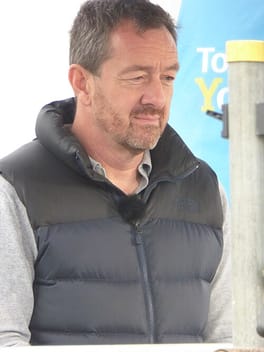
Photo: Cs-wolves / CC BY-SA 4.0 (source: Wikimedia Commons)
Chris Boardman is listed as a track cyclist, sport cyclist and engineer. Chris Boardman was born on August 26, 1968 in Hoylake, United Kingdom. That works out to 58 years old in 2026. Education on record includes Hilbre High School. Recorded honors include Member of the Order of the British Empire.
My Take
Chris Boardman is one of those athletes whose mind impressed me as much as his legs. Winning individual pursuit gold at the 1992 Olympics and breaking the world hour record three times would already make him a legend, but it's his engineering instinct that fascinates me most. He treated cycling as a problem to be solved, obsessing over aerodynamics and equipment, and that thinking helped reshape how the sport approaches speed. The MBE and his Tour de France yellow jerseys confirm the pedigree. I see him as a bridge between raw competition and innovation, the rare champion who kept influencing the sport long after he stopped racing.
This take was written by generative AI, one per person, from publicly reported facts (editorial policy). It is a reading of the record, not reporting.
1. Profile
- Name (English)
- Chris Boardman
- Name (Japanese)
- クリス・ボードマン
- Reading
- くりす・ぼーどまん
- Born
- August 26, 1968 (age 58)
- Origin
- Hoylake, United Kingdom
- Height
- 175 cm
- Occupation
- track cyclist / sport cyclist / engineer
- Zodiac / Chinese zodiac
- Virgo / Monkey
2. Background
- High school
- Hilbre High School
Awards & achievements
- Member of the Order of the British Empire
3. Links
4. About this entry
Tags
- Last updated
Facts are limited to publicly available information up to 2024; non-public or unconfirmed items are omitted. English text is machine-assisted (facts translated by Sonnet, "My Take" written by Opus 4.8). The Japanese page is the source of record.
Frequently asked questions
When was Chris Boardman born?
Born August 26, 1968 (age 58).
Where is Chris Boardman from?
Chris Boardman is from Hoylake, United Kingdom.
What does Chris Boardman do?
Chris Boardman works as track cyclist, sport cyclist, engineer.
How tall is Chris Boardman?
Chris Boardman is 175 cm.
Track cyclist — see all → · Sport cyclist — see all → · More people from the United Kingdom →