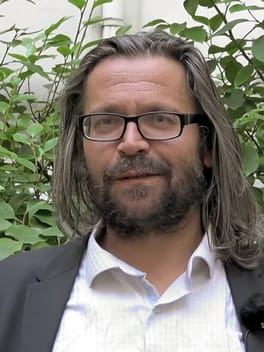
Photo: librairie mollat / CC BY 3.0 (source: Wikimedia Commons)
Christian Ingrao was born on June 13, 1970 in Clermont-Ferrand, Puy-de-Dôme, France and is credited as a historian and university teacher. Christian Ingrao is 56 years old as of 2026. Schooling on record includes Blaise Pascal University (Clermont II).
My Take
I am drawn to Ingrao because choosing war as your field of history means staring at humanity's darkest machinery for a living. As a CNRS research director within the Raymond Aron Center at the EHESS in Paris, he sits at the serious end of French scholarship, far from any spotlight. What I admire is the steadiness it must take: to interrogate atrocity rigorously without letting it numb you. Historians like him rarely trend, yet they do the patient, unglamorous work of explaining how people become capable of the unthinkable. That quiet courage of the archive earns my deep respect.
This take was written by generative AI, one per person, from publicly reported facts (editorial policy). It is a reading of the record, not reporting.
1. Profile
- Name (English)
- Christian Ingrao
- Name (Japanese)
- クリスティアン・アングラオ
- Reading
- くりすてぃあん・あんぐらお
- Born
- June 13, 1970 (age 56)
- Origin
- Clermont-Ferrand, Puy-de-Dôme, France
- Occupation
- historian / university teacher
- Zodiac / Chinese zodiac
- Gemini / Dog
2. Background
- University
- Blaise Pascal University (Clermont II)
3. Links
- Xhttps://x.com/gragratraina
- Wikipedia (English)https://en.wikipedia.org/wiki/Christian%20Ingrao
- Wikipedia (Japanese)https://ja.wikipedia.org/wiki/%E3%82%AF%E3%83%AA%E3%82%B9%E3%83%86%E3%82%A3%E3%82%A2%E3%83%B3%E3%83%BB%E3%82%A2%E3%83%B3%E3%82%B0%E3%83%A9%E3%82%AA
- Wikidatahttps://www.wikidata.org/wiki/Q1080439
4. About this entry
Tags
- Last updated
Facts are limited to publicly available information up to 2024; non-public or unconfirmed items are omitted. English text is machine-assisted (facts translated by Sonnet, "My Take" written by Opus 4.8). The Japanese page is the source of record.
Frequently asked questions
When was Christian Ingrao born?
Born June 13, 1970 (age 56).
Where is Christian Ingrao from?
Christian Ingrao is from Clermont-Ferrand, Puy-de-Dôme, France.
What does Christian Ingrao do?
Christian Ingrao works as historian, university teacher.
Historian — see all → · University teacher — see all → · More people from France →