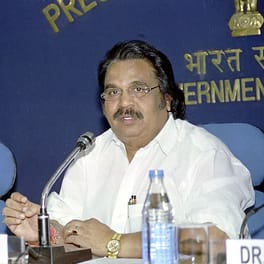
Photo: Ministry of Coal / GODL-India (source: Wikimedia Commons)
Born on May 4, 1942 in Palakollu, West Godavari district, India, Dasari Narayana Rao was a film director, actor and politician. Death is recorded on May 30, 2017, at the age of 75. Dasari Narayana Rao was educated at Sri Y N College. Awards on record include Raghupathi Venkaiah Award (1990), National Film Award – Special Jury Award / Special Mention (1998) and Filmfare Lifetime Achievement Award – South (2001).
My Take
I find Dasari Narayana Rao genuinely staggering. Directing more than 150 feature films and holding a Limca World Record for the most films directed is the kind of output that redefines what a career can be. The epithet Darsaka Ratna, jewel among directors, feels earned. But what really earns my respect is his range: director, actor, screenwriter, lyricist, choreographer and politician, all in one life. Telugu cinema gave him a Lifetime Achievement Filmfare and a Raghupathi Venkaiah Award, yet his real legacy is sheer industriousness. He passed in 2017, but craftsmen who build at this scale leave footprints that simply do not erase.
This take was written by generative AI, one per person, from publicly reported facts (editorial policy). It is a reading of the record, not reporting.
1. Profile
- Name (English)
- Dasari Narayana Rao
- Name (Japanese)
- ダサリ・ナラヤナ・ラオ
- Reading
- ださり・ならやな・らお
- Born
- May 4, 1942 – May 30, 2017
- Origin
- Palakollu, West Godavari district, India
- Occupation
- film director / actor / politician / screenwriter / choreographer
- Zodiac / Chinese zodiac
- Taurus / Horse
2. Background
- University
- Sri Y N College
Awards & achievements
- 1990 Raghupathi Venkaiah Award
- 1998 National Film Award – Special Jury Award / Special Mention
- 2001 Filmfare Lifetime Achievement Award – South
3. Links
- Xhttps://x.com/dasarinarayana9
- Wikipedia (English)https://en.wikipedia.org/wiki/Dasari%20Narayana%20Rao
- Wikipedia (Japanese)https://ja.wikipedia.org/wiki/%E3%83%80%E3%82%B5%E3%83%AA%E3%83%BB%E3%83%8A%E3%83%BC%E3%83%A9%E3%83%BC%E3%83%A4%E3%83%8A%E3%83%BB%E3%83%A9%E3%83%BC%E3%82%AA
- Wikidatahttps://www.wikidata.org/wiki/Q3595535
4. About this entry
Tags
- Last updated
Facts are limited to publicly available information up to 2024; non-public or unconfirmed items are omitted. English text is machine-assisted (facts translated by Sonnet, "My Take" written by Opus 4.8). The Japanese page is the source of record.
Frequently asked questions
When was Dasari Narayana Rao born?
Born May 4, 1942.
When did Dasari Narayana Rao die?
Died May 30, 2017, aged 75.
Where was Dasari Narayana Rao from?
Dasari Narayana Rao was from Palakollu, West Godavari district, India.
What did Dasari Narayana Rao do?
Dasari Narayana Rao worked as film director, actor, politician, screenwriter, choreographer.
Film director — see all → · Actor — see all → · More people from India →