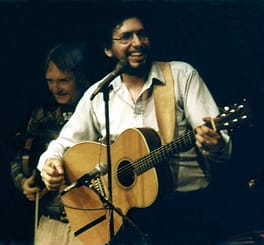
Photo: David Saddler / CC BY 2.0 (source: Wikimedia Commons)
David Bromberg was born on September 19, 1945 in Philadelphia, Pennsylvania, United States and is credited as a musician, screenwriter and singer. That puts David Bromberg at 81 years old in 2026. Education on record includes Columbia College.
My Take
David Bromberg is the kind of musician's musician I find endlessly endearing. A Philadelphia native who passed through Columbia before committing fully to music, he refuses to sit in any single genre, gliding between bluegrass, blues, folk, jazz and country with the ease of someone who simply loves the instrument. His knack for playing rhythm and lead guitar at once is a quiet flex, and those famously quirky, humorous lyrics reveal real personality rather than mere technique. He may never be a household name, but artists like Bromberg are the connective tissue of American roots music, and his decades of steady output speak to a lifelong, unpretentious devotion.
This take was written by generative AI, one per person, from publicly reported facts (editorial policy). It is a reading of the record, not reporting.
1. Profile
- Name (English)
- David Bromberg
- Name (Japanese)
- デヴィッド・ブロムバーグ
- Reading
- でゔぃっど・ぶろむばーぐ
- Born
- September 19, 1945 (age 81)
- Origin
- Philadelphia, Pennsylvania, United States
- Occupation
- musician / screenwriter / singer / guitarist / songwriter
- Zodiac / Chinese zodiac
- Virgo / Rooster
2. Background
- University
- Columbia College
3. Links
- Official sitehttps://davidbromberg.org/
- Wikipedia (English)https://en.wikipedia.org/wiki/David%20Bromberg
- Wikipedia (Japanese)https://ja.wikipedia.org/wiki/%E3%83%87%E3%83%B4%E3%82%A3%E3%83%83%E3%83%89%E3%83%BB%E3%83%96%E3%83%AD%E3%83%A0%E3%83%90%E3%83%BC%E3%82%B0
- Wikidatahttps://www.wikidata.org/wiki/Q328664
4. About this entry
Tags
- Last updated
Facts are limited to publicly available information up to 2024; non-public or unconfirmed items are omitted. English text is machine-assisted (facts translated by Sonnet, "My Take" written by Opus 4.8). The Japanese page is the source of record.
Frequently asked questions
When was David Bromberg born?
Born September 19, 1945 (age 81).
Where is David Bromberg from?
David Bromberg is from Philadelphia, Pennsylvania, United States.
What does David Bromberg do?
David Bromberg works as musician, screenwriter, singer, guitarist, songwriter.
Musician — see all → · Screenwriter — see all → · More people from the United States →