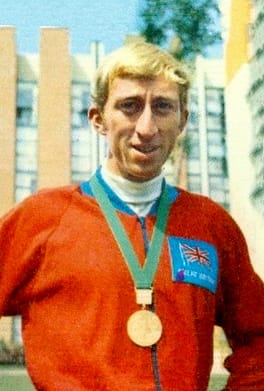
Photo: Unknown author / Public domain (source: Wikimedia Commons)
David Hemery, born on July 18, 1944 in Cirencester, United Kingdom, is an athletics competitor. David Hemery is 82 years old as of 2026. Schooling on record includes Boston University. Listed accolades include Commander of the Order of the British Empire and BBC Sports Personality of the Year Award (1968). The listed height is 187 cm.
My Take
David Hemery commands instant respect from me. Winning 400-metre hurdles gold at the 1968 Mexico City Olympics in a world record, at altitude no less, is the stuff of legend, not mere achievement. Add the BBC Sports Personality of the Year that same year and a CBE, and you have an athlete who transcended his sport. I picture that 187 cm frame floating over the hurdles and can't help being awed. What seals it for me is that he poured his later years into coaching and education rather than coasting on glory. Hemery strikes me as first-rate in both competition and character, the genuine article.
This take was written by generative AI, one per person, from publicly reported facts (editorial policy). It is a reading of the record, not reporting.
1. Profile
- Name (English)
- David Hemery
- Name (Japanese)
- デビッド・ヘメリー
- Reading
- でびっど・へめりー
- Born
- July 18, 1944 (age 82)
- Origin
- Cirencester, United Kingdom
- Height
- 187 cm
- Occupation
- athletics competitor
- Zodiac / Chinese zodiac
- Cancer / Monkey
2. Background
- University
- Boston University
Awards & achievements
- Commander of the Order of the British Empire
- 1968 BBC Sports Personality of the Year Award
3. Links
4. About this entry
Tags
- Last updated
Facts are limited to publicly available information up to 2024; non-public or unconfirmed items are omitted. English text is machine-assisted (facts translated by Sonnet, "My Take" written by Opus 4.8). The Japanese page is the source of record.
Frequently asked questions
When was David Hemery born?
Born July 18, 1944 (age 82).
Where is David Hemery from?
David Hemery is from Cirencester, United Kingdom.
What does David Hemery do?
David Hemery works as athletics competitor.
How tall is David Hemery?
David Hemery is 187 cm.
Athletics competitor — see all → · More people from the United Kingdom →