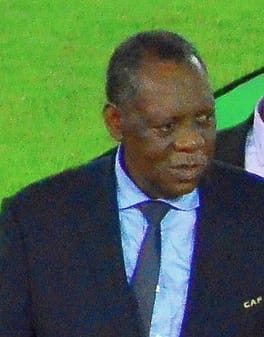
Photo: Ben Sutherland from Crystal Palace, London, UK / CC BY 2.0 (source: Wikimedia Commons)
Issa Hayatou was a basketball player, athletics competitor and sports official, born on August 9, 1946 in Garoua, North, Cameroon. Issa Hayatou died on August 8, 2024, aged 77. Schooling on record includes University of Yaoundé. Listed accolades include Order of the Companions of O. R. Tambo.
My Take
Issa Hayatou is one of those figures whose name means little to casual fans but everything to anyone who follows football governance. Running the Confederation of African Football for nearly three decades, from 1988 to 2017, he shaped the modern African game and briefly served as acting FIFA president. What interests me is the arc: a Cameroonian who started as an athlete before becoming one of the sport's most powerful administrators. That kind of longevity at the top is rare and inevitably controversial. He died in 2024, a day shy of 78, leaving a complicated legacy I think historians of the game will keep arguing over.
This take was written by generative AI, one per person, from publicly reported facts (editorial policy). It is a reading of the record, not reporting.
1. Profile
- Name (English)
- Issa Hayatou
- Name (Japanese)
- イッサ・ハヤトウ
- Reading
- いっさ・はやとう
- Born
- August 9, 1946 – August 8, 2024
- Origin
- Garoua, North, Cameroon
- Occupation
- basketball player / athletics competitor / sports official / functionary
- Zodiac / Chinese zodiac
- Leo / Dog
2. Background
- University
- University of Yaoundé
Awards & achievements
- Order of the Companions of O. R. Tambo
3. Links
- Wikipedia (English)https://en.wikipedia.org/wiki/Issa%20Hayatou
- Wikipedia (Japanese)https://ja.wikipedia.org/wiki/%E3%82%A4%E3%83%83%E3%82%B5%E3%83%BB%E3%83%8F%E3%83%A4%E3%83%88%E3%82%A6
- Wikidatahttps://www.wikidata.org/wiki/Q250005
4. About this entry
Tags
- Last updated
Facts are limited to publicly available information up to 2024; non-public or unconfirmed items are omitted. English text is machine-assisted (facts translated by Sonnet, "My Take" written by Opus 4.8). The Japanese page is the source of record.
Frequently asked questions
When was Issa Hayatou born?
Born August 9, 1946.
When did Issa Hayatou die?
Died August 8, 2024, aged 77.
Where was Issa Hayatou from?
Issa Hayatou was from Garoua, North, Cameroon.
What did Issa Hayatou do?
Issa Hayatou worked as basketball player, athletics competitor, sports official, functionary.
Basketball player — see all → · Athletics competitor — see all → · More people from Cameroon →