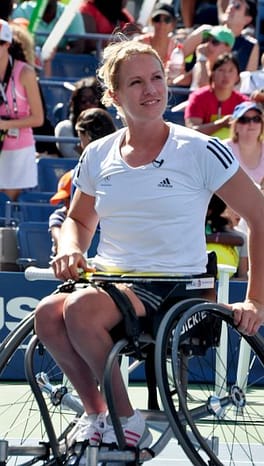
Photo: nick step / CC BY 2.0 (source: Wikimedia Commons)
Esther Vergeer is a wheelchair tennis player and basketball player, born on July 18, 1981 in Woerden, Utrecht, Netherlands. As of 2026, Esther Vergeer is 45 years old. Education on record includes Minkema College. Recorded honors include Fanny Blankers-Koen Career Award (2016) and International Tennis Hall of Fame.
My Take
Esther Vergeer is, quite simply, one of the most dominant athletes in any sport, ever. Forty-three major titles, seven Paralympic golds, and a closing stretch of years without a single loss is a record that almost defies belief. Coming from Woerden in the Netherlands and starting out in basketball, she brought a fierce competitive instinct to wheelchair tennis and never let go of it. What moves me most is that she retired while still untouchable. I think she deserves to be discussed not as a great wheelchair athlete but as one of the greatest competitors the game has produced, full stop.
This take was written by generative AI, one per person, from publicly reported facts (editorial policy). It is a reading of the record, not reporting.
1. Profile
- Name (English)
- Esther Vergeer
- Name (Japanese)
- エステル・フェルヘール
- Reading
- えすてる・ふぇるへーる
- Born
- July 18, 1981 (age 45)
- Origin
- Woerden, Utrecht, Netherlands
- Occupation
- wheelchair tennis player / basketball player
- Zodiac / Chinese zodiac
- Cancer / Rooster
2. Background
- University
- Minkema College
Awards & achievements
- 2016 Fanny Blankers-Koen Career Award
- International Tennis Hall of Fame
3. Links
- Official sitehttps://esthervergeer.social/
- Instagramhttps://www.instagram.com/esthervergeer/
- Xhttps://x.com/esthervergeer
- Wikipedia (English)https://en.wikipedia.org/wiki/Esther%20Vergeer
- Wikipedia (Japanese)https://ja.wikipedia.org/wiki/%E3%82%A8%E3%82%B9%E3%83%86%E3%83%AB%E3%83%BB%E3%83%95%E3%82%A7%E3%83%AB%E3%83%98%E3%83%BC%E3%83%AB
- Wikidatahttps://www.wikidata.org/wiki/Q259606
4. About this entry
Tags
- Last updated
Facts are limited to publicly available information up to 2024; non-public or unconfirmed items are omitted. English text is machine-assisted (facts translated by Sonnet, "My Take" written by Opus 4.8). The Japanese page is the source of record.
Frequently asked questions
When was Esther Vergeer born?
Born July 18, 1981 (age 45).
Where is Esther Vergeer from?
Esther Vergeer is from Woerden, Utrecht, Netherlands.
What does Esther Vergeer do?
Esther Vergeer works as wheelchair tennis player, basketball player.
Basketball player — see all → · More people from the Netherlands →