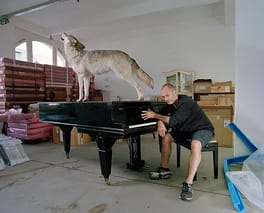
Photo: Unknown author / CC BY-SA 4.0 (source: Wikimedia Commons)
Public records list Douglas Gordon as a painter, artist and printmaker. Douglas Gordon was born on September 20, 1966 in Glasgow, United Kingdom. The age as of 2026 is 60. Awards on record include Turner Prize (1996). Credited works include 24 Hour Psycho.
My Take
Douglas Gordon is one of the few contemporary artists who genuinely rewired how I think about time and attention. Stretching Hitchcock's Psycho across a full 24 hours is such a simple gesture, yet it turns watching itself into the subject; it gave me chills the first time I understood it. He is labelled painter, photographer, sculptor, but I read all of it as one obsession: the slipperiness of memory and perception. Winning the Turner Prize in 1996 felt less like a coronation than a warning that this Glaswegian would keep unsettling us. Based in Berlin now, he remains, to me, beautifully untrustworthy in the best way.
This take was written by generative AI, one per person, from publicly reported facts (editorial policy). It is a reading of the record, not reporting.
1. Profile
- Name (English)
- Douglas Gordon
- Name (Japanese)
- ダグラス・ゴードン
- Reading
- だぐらす・ごーどん
- Born
- September 20, 1966 (age 60)
- Origin
- Glasgow, United Kingdom
- Occupation
- painter / artist / printmaker / photographer / sculptor
- Zodiac / Chinese zodiac
- Virgo / Horse
2. Background
Awards & achievements
- 1996 Turner Prize
3. Works & records
Filmography / notable works
| Category | Title |
|---|---|
| Notable work | 24 Hour Psycho |
4. Links
5. About this entry
Tags
- Last updated
Facts are limited to publicly available information up to 2024; non-public or unconfirmed items are omitted. English text is machine-assisted (facts translated by Sonnet, "My Take" written by Opus 4.8). The Japanese page is the source of record.
Frequently asked questions
When was Douglas Gordon born?
Born September 20, 1966 (age 60).
Where is Douglas Gordon from?
Douglas Gordon is from Glasgow, United Kingdom.
What does Douglas Gordon do?
Douglas Gordon works as painter, artist, printmaker, photographer, sculptor.
What is Douglas Gordon known for?
Notable works include 24 Hour Psycho.
Painter — see all → · Artist — see all → · More people from the United Kingdom →