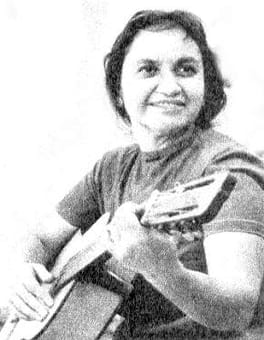
Photo: Revista Argentina "Panorama" / Public domain (source: Wikimedia Commons)
Violeta Parra, born on October 4, 1917 in San Carlos, Ñuble Province, Chile, was a singer-songwriter, poet and painter. Violeta Parra died on February 5, 1967, aged 49. Awards on record include Latin Songwriters Hall of Fame (2014) and Latin Grammy Hall of Fame (2013). Credited works include Gracias a la vida, El gavilán and Volver a los 17.
My Take
Violeta Parra is one of those rare figures who refuse to fit in a single box, and that is exactly why I admire her so much. A composer, poet, painter, sculptor and embroiderer, she treated creativity as one continuous act rather than separate crafts. What moves me most is that she did not just perform Chilean folk music, she went out and rescued it, then reinvented it into the Nueva Cancion movement that reshaped Latin American culture. Gracias a la vida alone would secure her immortality. That she died so young in 1967 makes her output feel almost impossibly dense. I find her fearless and irreplaceable.
This take was written by generative AI, one per person, from publicly reported facts (editorial policy). It is a reading of the record, not reporting.
1. Profile
- Name (English)
- Violeta Parra
- Name (Japanese)
- ビオレータ・パラ
- Reading
- びおれーた・ぱら
- Born
- October 4, 1917 – February 5, 1967
- Origin
- San Carlos, Ñuble Province, Chile
- Occupation
- singer-songwriter / poet / painter / sculptor / embroiderer
- Zodiac / Chinese zodiac
- Libra / Snake
2. Background
Awards & achievements
- 2014 Latin Songwriters Hall of Fame
- 2013 Latin Grammy Hall of Fame
3. Works & records
Filmography / notable works
| Category | Title |
|---|---|
| Notable work | Gracias a la vida |
| Notable work | El gavilán |
| Notable work | Volver a los 17 |
4. Links
- Wikipedia (English)https://en.wikipedia.org/wiki/Violeta%20Parra
- Wikipedia (Japanese)https://ja.wikipedia.org/wiki/%E3%83%93%E3%82%AA%E3%83%AC%E3%83%BC%E3%82%BF%E3%83%BB%E3%83%91%E3%83%A9
- Wikidatahttps://www.wikidata.org/wiki/Q230499
5. About this entry
Tags
- Last updated
Facts are limited to publicly available information up to 2024; non-public or unconfirmed items are omitted. English text is machine-assisted (facts translated by Sonnet, "My Take" written by Opus 4.8). The Japanese page is the source of record.
Frequently asked questions
When was Violeta Parra born?
Born October 4, 1917.
When did Violeta Parra die?
Died February 5, 1967, aged 49.
Where was Violeta Parra from?
Violeta Parra was from San Carlos, Ñuble Province, Chile.
What did Violeta Parra do?
Violeta Parra worked as singer-songwriter, poet, painter, sculptor, embroiderer.
What was Violeta Parra known for?
Notable works include Gracias a la vida, El gavilán, Volver a los 17.
Singer-songwriter — see all → · Poet — see all → · More people from Chile →