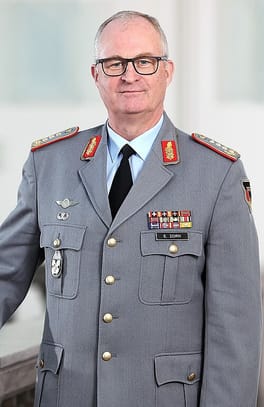
Photo: SK Bw Fan / CC BY-SA 4.0 (source: Wikimedia Commons)
Eberhard Zorn is a military officer, born on February 19, 1960 in Saarbrücken, Saarland, Germany. Eberhard Zorn is 66 years old as of 2026. Education on record includes Helmut Schmidt University. Recorded honors include Gold Cross of Honour of the Bundeswehr, Silver Cross of Honour of the Bundeswehr, German Armed Forces ISAF Service Medal and 5 more.
My Take
Eberhard Zorn strikes me as a soldier's soldier. Rising from Saarbrücken to become the 16th Inspector General of the Bundeswehr, Germany's highest military post, he wears a UN Medal and a parachutist badge that signal real field experience beneath the desk. Topping a military organization isn't about swagger; I suspect it's about carrying responsibility heavy enough to steal your sleep. Born in 1960, he watched the world lurch from the Cold War through its aftermath in uniform, and that breeds a quiet steadiness I find compelling. There's nothing flashy here, and that plainspoken reliability is exactly what draws me to him.
This take was written by generative AI, one per person, from publicly reported facts (editorial policy). It is a reading of the record, not reporting.
1. Profile
- Name (English)
- Eberhard Zorn
- Name (Japanese)
- エーベルハルト・ツォルン
- Reading
- えーべるはると・つぉるん
- Born
- February 19, 1960 (age 66)
- Origin
- Saarbrücken, Saarland, Germany
- Occupation
- military officer
- Zodiac / Chinese zodiac
- Pisces / Rat
2. Background
- University
- Helmut Schmidt University
Awards & achievements
- Gold Cross of Honour of the Bundeswehr
- Silver Cross of Honour of the Bundeswehr
- German Armed Forces ISAF Service Medal
- German Armed Forces SFOR Service Medal
- United Nations Medal
- NATO medal for the former Yugoslavia
- Parachutist Badge
- German Sports Badge
3. Links
4. About this entry
Tags
- Last updated
Facts are limited to publicly available information up to 2024; non-public or unconfirmed items are omitted. English text is machine-assisted (facts translated by Sonnet, "My Take" written by Opus 4.8). The Japanese page is the source of record.
Frequently asked questions
When was Eberhard Zorn born?
Born February 19, 1960 (age 66).
Where is Eberhard Zorn from?
Eberhard Zorn is from Saarbrücken, Saarland, Germany.
What does Eberhard Zorn do?
Eberhard Zorn works as military officer.