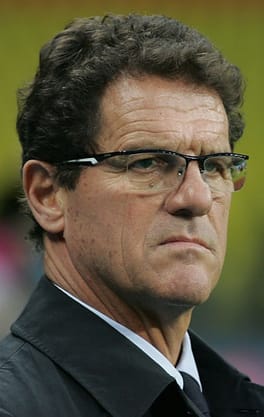
Photo: Садовников Дмитрий / CC BY-SA 3.0 (source: Wikimedia Commons)
Born on June 18, 1946 in San Canzian d'Isonzo, Friuli Venezia Giulia, Italy, Fabio Capello is an association football player, association football coach and art collector. As of 2026, Fabio Capello is 80 years old. Recorded honors include Italian Football Hall of Fame - Italian manager (2013). The listed height is 178 cm.
My Take
Fabio Capello embodies a vanishing kind of footballing authority. A combative midfielder for Milan and Juventus, he became legendary chiefly as a manager defined by iron discipline and a relentless will to win. His rigidity divides opinion, but I'm drawn to that refusal to compromise; he built winning structures with almost obsessive craft. What humanizes him for me is the art collector hidden behind the touchline tyrant, a man who imposes ruthless order on the pitch yet pours his soul into beauty off it. Rising from a small town in northern Italy to the global summit took sheer obstinacy. I love that old-school, principled severity.
This take was written by generative AI, one per person, from publicly reported facts (editorial policy). It is a reading of the record, not reporting.
1. Profile
- Name (English)
- Fabio Capello
- Name (Japanese)
- ファビオ・カペッロ
- Reading
- ふぁびお・かぺっろ
- Born
- June 18, 1946 (age 80)
- Origin
- San Canzian d'Isonzo, Friuli Venezia Giulia, Italy
- Height
- 178 cm
- Occupation
- association football player / association football coach / art collector
- Zodiac / Chinese zodiac
- Gemini / Dog
2. Background
Awards & achievements
- 2013 Italian Football Hall of Fame - Italian manager
3. Links
4. About this entry
Tags
- Last updated
Facts are limited to publicly available information up to 2024; non-public or unconfirmed items are omitted. English text is machine-assisted (facts translated by Sonnet, "My Take" written by Opus 4.8). The Japanese page is the source of record.
Frequently asked questions
When was Fabio Capello born?
Fabio Capello was born on June 18, 1946 and is 80 years old.
Where is Fabio Capello from?
Fabio Capello is from San Canzian d'Isonzo, Friuli Venezia Giulia, Italy.
What does Fabio Capello do?
Fabio Capello works as association football player, association football coach, art collector.
How tall is Fabio Capello?
Fabio Capello is 178 cm tall.
Association football player — see all → · Association football coach — see all → · More people from Italy → · More people born on June 18 →