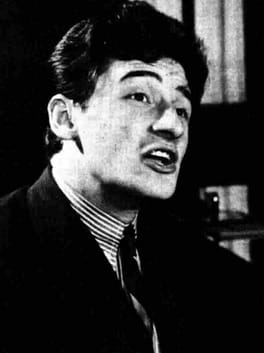
Photo: Unknown author / Public domain (source: Wikimedia Commons)
Pino Donaggio is a songwriter, film score composer and singer, born on November 24, 1941 in Burano, Italy. As of 2026, Pino Donaggio is 84 years old. Awards on record include Time Machine Award (2013). Credited works include Io che non vivo (senza te).
My Take
Pino Donaggio is a name film score fans speak with real affection, and I'm one of them. Born in Burano in 1941 and classically trained as a violinist, he made his reputation through his long partnership with Brian De Palma, scoring the lush, often menacing music behind that director's thrillers. What I find fascinating is that before all that he wrote Io che non vivo (senza te), the Italian song the world knows as You Don't Have to Say You Love Me. To move from pop balladry to suspense cinema is a rare journey. His music has a melodic warmth that makes even the darkest scenes ache.
This take was written by generative AI, one per person, from publicly reported facts (editorial policy). It is a reading of the record, not reporting.
1. Profile
- Name (English)
- Pino Donaggio
- Name (Japanese)
- ピノ・ドナッジオ
- Reading
- ぴの・どなっじお
- Born
- November 24, 1941 (age 84)
- Origin
- Burano, Italy
- Occupation
- composer / songwriter / film score composer / singer / recording artist
- Zodiac / Chinese zodiac
- Sagittarius / Snake
2. Background
Awards & achievements
- 2013 Time Machine Award
3. Works & records
Filmography / notable works
| Category | Title |
|---|---|
| Notable work | Io che non vivo (senza te) |
4. Links
- Official sitehttps://www.zafara.org/pinodonaggio/entrada/index.htm
- Wikipedia (English)https://en.wikipedia.org/wiki/Pino%20Donaggio
- Wikipedia (Japanese)https://ja.wikipedia.org/wiki/%E3%83%94%E3%83%8E%E3%83%BB%E3%83%89%E3%83%8A%E3%83%83%E3%82%B8%E3%82%AA
- Wikidatahttps://www.wikidata.org/wiki/Q964311
5. About this entry
Tags
- Last updated
Facts are limited to publicly available information up to 2024; non-public or unconfirmed items are omitted. English text is machine-assisted (facts translated by Sonnet, "My Take" written by Opus 4.8). The Japanese page is the source of record.
Frequently asked questions
When was Pino Donaggio born?
Born November 24, 1941 (age 84).
Where is Pino Donaggio from?
Pino Donaggio is from Burano, Italy.
What does Pino Donaggio do?
Pino Donaggio works as composer, songwriter, film score composer, singer, recording artist.
What is Pino Donaggio known for?
Notable works include Io che non vivo (senza te).
Composer — see all → · Songwriter — see all → · More people from Italy →