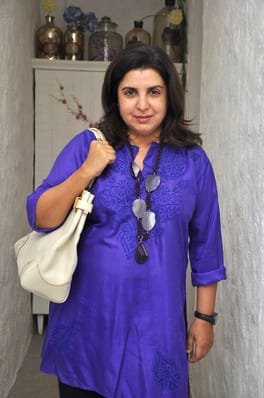
Photo: Bollywood Hungama / CC BY 3.0 (source: Wikimedia Commons)
Farah Khan is a film director, actor and television presenter. Farah Khan was born in Mumbai, Bombay State, India on January 9, 1965. That works out to 61 years old in 2026.
My Take
Farah Khan fascinates me as a true polymath of Hindi cinema. She started as a choreographer, the architect of those exuberant song-and-dance numbers, then stepped behind the camera to direct, write, produce and even act. Her debut Main Hoon Na was a commercial hit, and Om Shanti Om earned her Filmfare directing nominations, no small feat in an industry where female directors remain scarce. What I value most is her command of spectacle paired with the discipline to actually finish a film. She reads to me as pure creative energy channeled into craft, and I admire how she carved her own path.
This take was written by generative AI, one per person, from publicly reported facts (editorial policy). It is a reading of the record, not reporting.
1. Profile
- Name (English)
- Farah Khan
- Name (Japanese)
- ファラー・カーン
- Reading
- ふぁらー・かーん
- Born
- January 9, 1965 (age 61)
- Origin
- Mumbai, Bombay State, India
- Occupation
- film director / actor / television presenter / choreographer / screenwriter
- Zodiac / Chinese zodiac
- Capricorn / Snake
2. Links
- Instagramhttps://www.instagram.com/farahkhankunder/
- Xhttps://x.com/TheFarahKhan
- Wikipedia (English)https://en.wikipedia.org/wiki/Farah%20Khan
- Wikipedia (Japanese)https://ja.wikipedia.org/wiki/%E3%83%95%E3%82%A1%E3%83%A9%E3%83%BC%E3%83%BB%E3%82%AB%E3%83%BC%E3%83%B3
- Wikidatahttps://www.wikidata.org/wiki/Q167636
3. About this entry
Tags
- Last updated
Facts are limited to publicly available information up to 2024; non-public or unconfirmed items are omitted. English text is machine-assisted (facts translated by Sonnet, "My Take" written by Opus 4.8). The Japanese page is the source of record.
Frequently asked questions
When was Farah Khan born?
Born January 9, 1965 (age 61).
Where is Farah Khan from?
Farah Khan is from Mumbai, Bombay State, India.
What does Farah Khan do?
Farah Khan works as film director, actor, television presenter, choreographer, screenwriter.
Film director — see all → · Actor — see all → · More people from India →