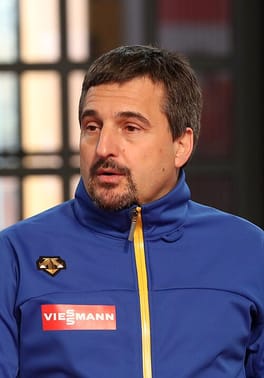
Photo: Sandro Halank, Wikimedia Commons / CC BY-SA 3.0 (source: Wikimedia Commons)
Georg Hackl is a luger, born on September 9, 1966 in Berchtesgaden, Upper Bavaria, Germany. Georg Hackl is 60 years old as of 2026. Listed accolades include Germany's Sports Hall of Fame (2020), German Sportspersonality of the Year (1998) and Bavarian Order of Merit. The listed height is 172 cm.
My Take
Georg Hackl is my favorite kind of winter-sports legend: utterly dominant yet endearingly human. Three Olympic gold medals and multiple world titles in luge, and still the nation lovingly nicknamed him the Speeding Weiswurst for how he looked rocketing down the ice in his white bodysuit. From the Bavarian mountain town of Berchtesgaden, he turned terrifying speed into something almost charming. There is something I genuinely love about an athlete who pushes the absolute limit of velocity while never losing his sense of humor. His induction into Germany's Sports Hall of Fame feels entirely earned.
This take was written by generative AI, one per person, from publicly reported facts (editorial policy). It is a reading of the record, not reporting.
1. Profile
- Name (English)
- Georg Hackl
- Name (Japanese)
- ゲオルク・ハックル
- Reading
- げおるく・はっくる
- Born
- September 9, 1966 (age 60)
- Origin
- Berchtesgaden, Upper Bavaria, Germany
- Height
- 172 cm
- Occupation
- luger
- Zodiac / Chinese zodiac
- Virgo / Horse
2. Background
Awards & achievements
- 2020 Germany's Sports Hall of Fame
- 1998 German Sportspersonality of the Year
- Bavarian Order of Merit
3. Links
4. About this entry
Tags
- Last updated
Facts are limited to publicly available information up to 2024; non-public or unconfirmed items are omitted. English text is machine-assisted (facts translated by Sonnet, "My Take" written by Opus 4.8). The Japanese page is the source of record.
Frequently asked questions
When was Georg Hackl born?
Born September 9, 1966 (age 60).
Where is Georg Hackl from?
Georg Hackl is from Berchtesgaden, Upper Bavaria, Germany.
What does Georg Hackl do?
Georg Hackl works as luger.
How tall is Georg Hackl?
Georg Hackl is 172 cm.