The Girl Who Was Given Only the Gift of Song: Hibari Misora and the Showa Era She Sang to a Close
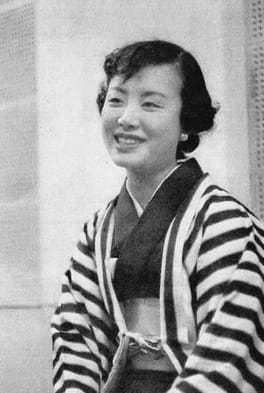
On May 29, 1937, in the Takigashira district of Isogo, Yokohama, a baby girl was born into the Kato family, who ran a fishmonger's shop. Her birth name was Kazue Kato. No one yet knew that this small child carried a voice that would one day earn her the title "Queen of Japanese popular music."
But when she opened her mouth, grown adults fell silent. She debuted in both film and recording at age eleven, became a national star at twelve, and went on singing for half a century until her death at fifty-two. Posthumously, she became the first woman ever to receive Japan's People's Honor Award. Her life was, in many ways, an entire era unto itself.
It Began with Her Father's Orchestra
In 1945, shortly after the war, her father Masukichi Kato founded the Aozora Orchestra. The young Kazue began singing on its stage under the name Kazue Misora, at a time when the country was still rising from the rubble.
The family business was selling fish; theirs was no showbusiness lineage. Yet her father sensed something in his daughter's voice and built her a stage. Given a place to sing, the girl met every expectation and then some. In time the composer Masao Koga recognized her talent and encouraged her, propelling her toward the next stage of her career.
A Debut at Eleven, the Summit at Twelve
In 1949, Hibari Misora appeared in the film Odoru Ryugujo and simultaneously made her recording debut with "Kappa Boogie-Woogie." She was just eleven years old.
The following year, 1950, she starred in the film Kanashiki Kuchibue, whose theme song sold an astonishing 450,000 copies. A child gripping a microphone and pouring out the full emotional weight of adult feeling — the sight moved a nation. Within roughly a year of her debut, she had climbed to the rank of national star.
Carrying It All Alone — Song and Screen
She was not only a singer but a star of the silver screen. In 1958 she signed an exclusive film contract with Toei and starred in numerous period dramas. Tokyo Kid, Hibari Torimoncho: Furisode Koban — she sang, she acted, she danced. A consummate all-around performer, she was equally at home with the shamisen and traditional Japanese dance.
"Ringo Oiwake," "Judo," "Kanashii Sake." When she sang, listeners felt their chests tighten for no reason they could name. In 1965 she won the Grand Prix at the Japan Record Awards for "Judo." Her phrasing, her vocal delivery — none of it imitated anyone. It had become a genre unto itself, called simply "Hibari Misora."
Like the Flow of a River, Seeing an Era Off
In her later years her health was far from certain. Even so, in 1988 she released "Kawa no Nagare no You ni." The song became a massive hit, selling more than two million copies, and as the Showa era moved toward its end, it rang out as if quietly seeing that whole era on its way.
Then, on June 24, 1989, she died of respiratory failure caused by idiopathic interstitial pneumonia, at the age of fifty-two. That same year she was posthumously awarded the People's Honor Award — the first woman to receive it. The final masterpiece she left behind is still sung across Japan to this day.
Perhaps heaven gave her nothing but the gift of song, heaped to overflowing. Yet it was unmistakably her own will and grit that polished, protected, and carried that gift across half a century, singing to the very last.
That she could rise, body failing, and still deliver "Kawa no Nagare no You ni" cleanly to its end — in that single fact the sheer magnitude of Hibari Misora is concentrated. To the diva who shouldered an entire era and sang it through, we can only bow our heads in gratitude.