From Child Prodigy to Showa Legend: The Flawless Fifty Years of Hideko Takamine
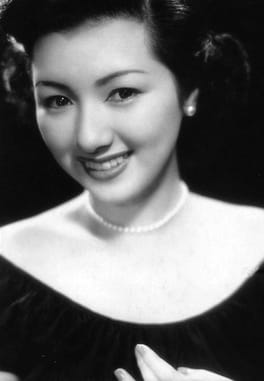
A girl steps before the camera at the age of five, and instead of fading, she climbs all the way to becoming one of the defining actresses of an era. That story actually happened. Her name was Hideko Takamine — born Hideko Matsuyama in Hakodate, Hokkaido, in 1924. After her child-actor debut in the 1929 film Haha, she was hailed early on as a "genius child star."
It is a truism of show business that child stars rarely last. Takamine shattered that rule with ease, becoming a symbol of postwar Japanese cinema. She amassed one of the most decorated award records in the industry. This is the record of an actress who rose from child prodigy to legend — fifty years without a single weak spot.
The Child Star Who Could Not Go to School
In 1929, the five-year-old Hideko made her film debut as a child actress in the Shochiku Kamata production Haha. After getting a chance to tour the studio, she reportedly crashed an audition for a child role in a Nomura film and won the part. It was a moment where luck and talent crossed paths.
But there was a price. Because of her relentless schedule, she was barely able to attend elementary school. When she transferred to Toho (then P.C.L.) in 1937, she negotiated enrollment at the Bunka Gakuin girls' school as a condition of her contract — but withdrew after about a year and a half, again because she was simply too busy. From childhood, she lived in the world of the screen, even at the cost of her own education.
Going Freelance, and Japan's First Color Film
After moving through Shochiku, Toho, and Shin-Toho, Takamine became a freelance actress in 1950. In an age when studio contracts were the norm, she chose to stand on her own two feet. The year before, in 1949, she had appeared in Ginza Cancan Musume, and the theme song she sang sold 500,000 copies — a smash hit that proved she could color the era with her voice as well as her acting.
Then, in 1951, she starred in a film that earned a permanent place in Japanese cinema history: Carmen Comes Home, the country's first full-color feature. At the very pivot point where film moved from black-and-white to color, she stood at the center as the lead.
Twenty-Four Eyes and Floating Clouds — Two Peaks
What cemented Takamine's standing was the 1954 film Twenty-Four Eyes, directed by Keisuke Kinoshita. Playing Miss Oishi, a young teacher at a tiny branch school on Shodoshima Island, she watched over her pupils as they were swept up by the war, and moved audiences to tears. The role won her the Blue Ribbon Award for Best Actress and the Mainichi Film Award for Best Actress.
The following year, in 1955, she played Yukiko Koda in Mikio Naruse's Floating Clouds. Her portrait of a woman sinking into an unrequited love — quietly sensual and devastatingly sad — is regarded as one of the high points of her craft. That same year, she married the film director Zenzo Matsuyama.
Acting Without Words — An Entire Role in Sign Language
No account of Takamine's power as an actress can skip 1961's Nameless, Poor, and Beautiful. It was the directorial debut of her husband, Zenzo Matsuyama.
Stripped of her greatest weapon — dialogue — she conveyed every subtle shift of emotion through her hands and her face alone. She met this exacting challenge brilliantly. For this film and the later The Eternal One, she received the Minister of Education's Art Award in 1962. In 1965, she won the Best Actress prize at the Locarno International Film Festival for Yearning, carrying her name onto the international stage.
Retirement, and a Second Gift
In 1979, after Shodo Satsujin: Musuko yo, Hideko Takamine retired from acting of her own accord. Even the way she stepped away was clean and decisive — entirely in character.
But her talent did not stop at acting. In 1976, her autobiographical essay collection Watashi no Watase Nikki won the 24th Japan Essayists Club Award. Collecting antiques, loving painting, and writing prose, she lived a quietly rich second act — not only as an actress but as an artist in her own right. On December 28, 2010, she closed her 86-year life at a hospital in Tokyo.
On screen at five, hailed as a genius child star despite barely attending school, and then rising straight to the top as a defining actress of the Showa era. She led Japan's first color film, carried an entire feature without a single line of dialogue, and after retiring won an award for her essays. Look anywhere, and there is not a single weak spot.
She prevailed not through flash but through unmistakable skill and grace, sustained across fifty years. Hideko Takamine was, without question, the real thing — a true star of the Showa age.