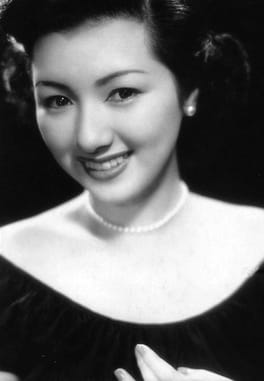
Photo: 新東宝 / Shin Tōhō / Public domain (source: Wikimedia Commons)
My Take
Okay, let me gush for a second: Hideko Takamine was the kind of actress who makes you realize how high the ceiling actually goes. She steps in front of a camera at five, becomes the "genius child star," and then somehow doesn't burn out but keeps leveling up into one of the defining faces of Showa cinema. Watch her teacher in Twenty-Four Eyes and good luck keeping it together; catch her in Naruse's Floating Clouds and you'll see this quiet, devastating melancholy that most actors couldn't fake in three lifetimes. And the woman starred in Japan's first color film, then walked off to write essays good enough to win awards. Antiques, painting, retiring on her own terms in '79. No flash, no fuss, just an absurd amount of class. A real one.
This take was written by generative AI, one per person, from publicly reported facts (editorial policy). It is a reading of the record, not reporting.
Story
From Child Prodigy to Showa Legend: The Flawless Fifty Years of Hideko Takamine
Overview
Hideko Takamine (born Hideko Matsuyama; 1924–2010) was one of the most celebrated actresses in Japanese cinema history, having made her screen debut at age five in the 1929 Shochiku Kamata film Haha. Over a fifty-year career spanning Shochiku, Toho, Shin-Toho, and a long freelance period, she earned major awards for landmark works such as Twenty-Four Eyes (1954), Floating Clouds (1955), and Nameless, Poor, and Beautiful (1961). She retired from acting in 1979 and went on to earn the Japan Essayists Club Award for her memoir Watashi no Watase Nikki, leaving a parallel legacy as a prose writer.
1. Profile
- Name (English)
- Hideko Takamine
- Name (Japanese)
- 高峰秀子
- Reading
- たかみね ひでこ
- Real name
- 松山秀子
- Born
- March 27, 1924 – December 28, 2010
- Origin
- Hakodate, Hokkaido, Japan
- Height
- 158 cm
- Occupation
- Actress / Singer / Essayist
- Zodiac / Chinese zodiac
- Aries / Rat
- Agency
- Retired (withdrew from acting in 1979)
- Agency history
- Shochiku Kamata Studio (1929–1937)
Toho Film (1937–1946)
Shin-Toho Film (1946–1950)
Freelance (1950–1979) - Active years
- 1929–1979 (actress); 1970s–2010 (essayist)
2. Background
- Elementary school
- Rarely attended (too busy as a child actor)
- High school
- Bunka Gakuin (enrolled 1937)
- University
- Did not attend
- Debut
- 1929 — appeared as a child actress in the Shochiku Kamata film Haha
Awards & achievements
- 1954 Blue Ribbon Award for Best Actress (Twenty-Four Eyes, Women's Garden, et al.)
- 1954 Mainichi Film Award for Best Actress (Twenty-Four Eyes)
- 1955 Mainichi Film Award for Best Actress (Floating Clouds)
- 1955 Kinema Junpo Best Actress Award, 29th (Floating Clouds)
- 1957 Mainichi Film Award for Best Actress (Times of Joy and Sorrow)
- 1961 Mainichi Film Award for Best Actress (Nameless, Poor, and Beautiful)
- 1962 12th Agency for Cultural Affairs Minister of Education Art Award (Nameless, Poor, and Beautiful; The Eternal One)
- 1965 Locarno International Film Festival Best Actress Award (Yearning)
- 1975 Blue Ribbon of Merit (Konshuhosho)
- 1976 24th Japan Essayists Club Award (Watashi no Watase Nikki)
- 1979 Japan Academy Prize for Outstanding Performance by an Actress (Intentions of Murder)
Timeline
- 1929Made her film debut at age five in the Shochiku Kamata production Haha, quickly gaining recognition as a prodigiously talented child actress.
- 1937Transferred to Toho (then P.C.L.); as promised in her contract, enrolled at Bunka Gakuin
- 1946Transferred to Shin-Toho Film.
- 1949Appeared in Ginza Cancan Musume; the theme song sold 500,000 copies.
- 1950Became a freelance actress.
- 1951Starred in Carmen Comes Home, Japan's first full-color feature film.
- 1954Starred in director Keisuke Kinoshita's Twenty-Four Eyes. Won the Blue Ribbon Award for Best Actress and the Mainichi Film Award for Best Actress.
- 1955Starred in director Mikio Naruse's Floating Clouds. Married film director Zenzo Matsuyama the same year.
- 1961Starred in Nameless, Poor, and Beautiful, her husband Zenzo Matsuyama's directorial debut.
- 1976Won the 24th Japan Essayists Club Award for her memoir essay collection Watashi no Watase Nikki.
- 1979Retired from acting after Intentions of Murder.
- 2010Died of lung cancer on December 28 at a hospital in Shibuya, Tokyo, aged 86.
3. Relationships
- Spouse
- Zenzo Matsuyama (film director; married 1955)
- Children
- No biological children (adopted daughter: Akemi Saito, writer)
4. Personality
Hobbies
- Antique collecting
- Viewing and creating paintings
- Essay writing
Specialties
- Acting (wide range of roles)
- Sign language
5. Works & records
Works summary
- Appearances
- 174
- By year (titles with a known year)
- 1950: 5, 1951: 3, 1952: 4, 1953: 4, 1954: 4, 1955: 4, 1956: 4, 1957: 4, 1958: 2, 1960: 3, 1961: 4, 1962: 5, 1963: 2, 1964: 2, 1965: 1, 1966: 1, 1967: 2, 1968: 4, 1969: 4, 1970: 1, 1971: 1, 1972: 1, 1973: 2, 1974: 1, 1975: 2, 1976: 5, 1978: 1, 1979: 1, 1980: 2, 1983: 1, year unknown: 94
Filmography / notable works
| Category | Title | Role | Year |
|---|---|---|---|
| Film | Carmen Comes Home | Lead | 1951 |
| Film | Twenty-Four Eyes | Lead (Hisako Oishi) | 1954 |
| Film | Floating Clouds | Lead (Yukiko Koda) | 1955 |
| Film | Times of Joy and Sorrow | Lead | 1957 |
| Film | Nameless, Poor, and Beautiful | Lead | 1961 |
| Film | The Eternal One | Lead | 1961 |
| Film | Intentions of Murder | Lead | 1979 |
| Song | Ginza Cancan Musume | Vocalist | 1949 |
| Book | Watashi no Watase Nikki (2 vols.) | Author | 1976 |
6. Links
- Wikipedia (Japanese)https://ja.wikipedia.org/wiki/%E9%AB%98%E5%B3%B0%E7%A7%80%E5%AD%90
- Wikidatahttps://www.wikidata.org/wiki/Q290963
7. About this entry
Tags
- Last updated
Only publicly available facts are listed; non-public or unconfirmed items are omitted. Base data was compiled from Wikidata from June 2026 onward; ages are recalculated daily and deaths are checked against Wikidata on an ongoing basis. Works and profile fields sourced from Wikipedia reflect content as of 2026-08-26. English text is machine-assisted (facts translated by Sonnet, "My Take" written by Opus 4.8). The Japanese page is the source of record.
Frequently asked questions
When was Hideko Takamine born?
Hideko Takamine was born on March 27, 1924.
When did Hideko Takamine die?
Hideko Takamine died on December 28, 2010, aged 86.
Where was Hideko Takamine from?
Hideko Takamine was from Hakodate, Hokkaido, Japan.
What did Hideko Takamine do?
Hideko Takamine worked as Actress, Singer, Essayist.
How tall was Hideko Takamine?
Hideko Takamine was 158 cm tall.
Which high school did Hideko Takamine attend?
Hideko Takamine attended Bunka Gakuin.
What agency was Hideko Takamine with?
Hideko Takamine was with Retired (withdrew from acting in 1979).
When was Hideko Takamine active?
Hideko Takamine's recorded active years were 1929–1979 (actress); 1970s–2010 (essayist).
What was Hideko Takamine known for?
Hideko Takamine's notable works include Carmen Comes Home, Twenty-Four Eyes, Floating Clouds.
Actress — see all → · Singer — see all → · More people from Japan → · More people born on March 27 →