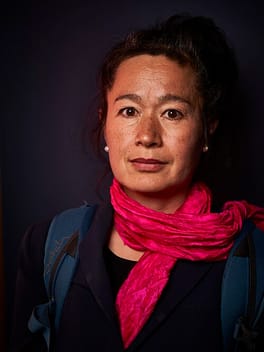
Photo: Dominik Butzmann / re:publica / CC BY-SA 2.0 (source: Wikimedia Commons)
Hito Steyerl was born on January 1, 1966 in Munich, Upper Bavaria, Germany and is credited as a film director, filmmaker and writer. As of 2026, Hito Steyerl is 60 years old. Education on record includes University of Television and Film Munich. Listed accolades include Yanghyun Prize (2016).
My Take
What draws me to Hito Steyerl is that she refuses to sit still inside any single label. Filmmaker, writer, video artist, theorist of the moving image - she treats those as one continuous practice rather than separate jobs, and that restlessness is exactly what makes her essential to anyone thinking about how images circulate today. I admire that she didn't stop at making work but moved into teaching digital media in Munich, passing the inquiry forward. Born on New Year's Day in 1966, she feels less like an artist with a finished body of work and more like an ongoing argument about what images do to us.
This take was written by generative AI, one per person, from publicly reported facts (editorial policy). It is a reading of the record, not reporting.
1. Profile
- Name (English)
- Hito Steyerl
- Name (Japanese)
- ヒト・シュタイエル
- Reading
- ひと・しゅたいえる
- Born
- January 1, 1966 (age 60)
- Origin
- Munich, Upper Bavaria, Germany
- Occupation
- film director / filmmaker / writer / video artist / visual artist
- Zodiac / Chinese zodiac
- Capricorn / Horse
2. Background
- University
- University of Television and Film Munich
Awards & achievements
- 2016 Yanghyun Prize
3. Links
4. About this entry
Tags
- Last updated
Facts are limited to publicly available information up to 2024; non-public or unconfirmed items are omitted. English text is machine-assisted (facts translated by Sonnet, "My Take" written by Opus 4.8). The Japanese page is the source of record.
Frequently asked questions
When was Hito Steyerl born?
Born January 1, 1966 (age 60).
Where is Hito Steyerl from?
Hito Steyerl is from Munich, Upper Bavaria, Germany.
What does Hito Steyerl do?
Hito Steyerl works as film director, filmmaker, writer, video artist, visual artist.
Film director — see all → · Filmmaker — see all → · More people from Germany →