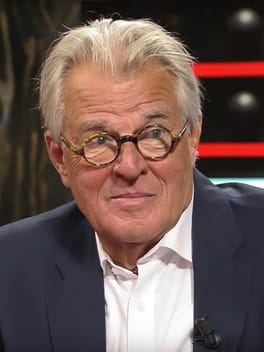
Photo: DWDD / CC BY 3.0 (source: Wikimedia Commons)
Jeroen Krabbé was born in Amsterdam, North Holland, Netherlands on December 5, 1944. Jeroen Krabbé is credited as a film actor, film director and painter. That works out to 81 years old in 2026. Awards on record include Golden Calf Culture Prize (1996), Frans Banninck Cocq Penning and Commander of the Order of the Netherlands Lion.
My Take
Jeroen Krabbé is exactly the kind of artist I gravitate toward, someone who refuses to be confined to a single craft. Equally at home in Dutch and English-language cinema, he broke through in Verhoeven's Soldier of Orange and The Fourth Man, then reached global audiences as the Bond villain Koskov. But it is his range beyond acting, directing films and painting seriously, that I find most compelling. Honored with the Order of the Netherlands Lion, he is a genuine cultural figure rather than just a screen presence. Krabbé creates as much as he performs, and that creative restlessness earns my real admiration.
This take was written by generative AI, one per person, from publicly reported facts (editorial policy). It is a reading of the record, not reporting.
1. Profile
- Name (English)
- Jeroen Krabbé
- Name (Japanese)
- ジェローン・クラッベ
- Reading
- じぇろーん・くらっべ
- Born
- December 5, 1944 (age 81)
- Origin
- Amsterdam, North Holland, Netherlands
- Occupation
- actor / film actor / film director / painter / television actor
- Zodiac / Chinese zodiac
- Sagittarius / Monkey
2. Background
Awards & achievements
- 1996 Golden Calf Culture Prize
- Frans Banninck Cocq Penning
- Commander of the Order of the Netherlands Lion
3. Links
4. About this entry
Tags
- Last updated
Facts are limited to publicly available information up to 2024; non-public or unconfirmed items are omitted. English text is machine-assisted (facts translated by Sonnet, "My Take" written by Opus 4.8). The Japanese page is the source of record.
Frequently asked questions
When was Jeroen Krabbé born?
Jeroen Krabbé was born on December 5, 1944 and is 81 years old.
Where is Jeroen Krabbé from?
Jeroen Krabbé is from Amsterdam, North Holland, Netherlands.
What does Jeroen Krabbé do?
Jeroen Krabbé works as actor, film actor, film director, painter, television actor.
Actor — see all → · Film actor — see all → · More people from the Netherlands → · More people born on December 5 →