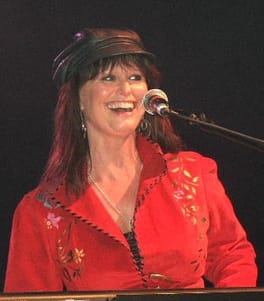
Photo: Ron Baker (Kingsnake) / CC BY-SA 2.0 (source: Wikimedia Commons)
Jessi Colter is a singer-songwriter, singer and pianist. Born on May 25, 1943, Jessi Colter is from Phoenix, Arizona, United States. That works out to 83 years old in 2026. Education on record includes Mesa High School.
My Take
What I admire about Jessi Colter is that she carved a lasting identity inside one of the most male-dominated corners of American music. It's tempting to file her under Waylon Jennings' wife, but "I'm Not Lisa" stands entirely on its own, and being one of the few women to surface from the outlaw country movement is no small feat. To me she represents quiet durability rather than spectacle, a singer-songwriter and pianist from Phoenix who simply kept making honest music. The fact that she remains active and visible decades later only deepens my respect. Hers is a career defined by conviction, not noise.
This take was written by generative AI, one per person, from publicly reported facts (editorial policy). It is a reading of the record, not reporting.
1. Profile
- Name (English)
- Jessi Colter
- Name (Japanese)
- ジェシー・コルター
- Reading
- じぇしー・こるたー
- Born
- May 25, 1943 (age 83)
- Origin
- Phoenix, Arizona, United States
- Occupation
- singer-songwriter / singer / pianist / recording artist / electronic keyboard
- Zodiac / Chinese zodiac
- Gemini / Goat
2. Background
- High school
- Mesa High School
3. Links
- Official sitehttp://officialjessicolter.com
- Instagramhttps://www.instagram.com/jessi_colter/
- Xhttps://x.com/jessi_colter
- Wikipedia (English)https://en.wikipedia.org/wiki/Jessi%20Colter
- Wikidatahttps://www.wikidata.org/wiki/Q243103
4. About this entry
Tags
- Last updated
Facts are limited to publicly available information up to 2024; non-public or unconfirmed items are omitted. English text is machine-assisted (facts translated by Sonnet, "My Take" written by Opus 4.8). The Japanese page is the source of record.
Frequently asked questions
When was Jessi Colter born?
Jessi Colter was born on May 25, 1943 and is 83 years old.
Where is Jessi Colter from?
Jessi Colter is from Phoenix, Arizona, United States.
What does Jessi Colter do?
Jessi Colter works as singer-songwriter, singer, pianist, recording artist, electronic keyboard.
Which high school did Jessi Colter attend?
Jessi Colter attended Mesa High School.
Singer-songwriter — see all → · Singer — see all → · More people from the United States → · More people born on May 25 →