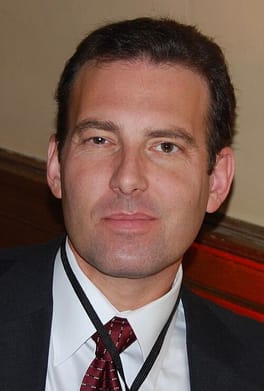
Photo: Aaron Fulkerson / CC BY-SA 2.0 (source: Wikimedia Commons)
Born on October 10, 1962, Larry Augustin is an engineer, computer scientist and businessperson. Larry Augustin is 63 years old as of 2026. Education on record includes University of Notre Dame.
My Take
Larry Augustin's story makes me grin. A Notre Dame-trained engineer turned entrepreneur, he founded VA Research, later Geeknet, and was a paper billionaire at 38 during the dot-com boom. The wealth is the eye-catching part, but what I respect is his appearance in Revolution OS, the documentary chronicling open source's rise. He bet on a build-it-together philosophy before that was the safe or lucrative thing to do. Later steering SugarCRM as chairman and serving as a VP at Amazon Web Services proves he could operate as well as evangelize. A technologist who is equally fluent in code and commerce always earns my admiration, and he clearly is.
This take was written by generative AI, one per person, from publicly reported facts (editorial policy). It is a reading of the record, not reporting.
1. Profile
- Name (English)
- Larry Augustin
- Name (Japanese)
- ラリー・オーガスティン
- Reading
- らりー・おーがすてぃん
- Born
- October 10, 1962 (age 63)
- Occupation
- engineer / computer scientist / businessperson
- Zodiac / Chinese zodiac
- Libra / Tiger
2. Background
- University
- University of Notre Dame
3. Links
- Official sitehttp://lmaugustin.com/
- Xhttps://x.com/lmaugustin
- Wikipedia (English)https://en.wikipedia.org/wiki/Larry%20Augustin
- Wikipedia (Japanese)https://ja.wikipedia.org/wiki/%E3%83%A9%E3%83%AA%E3%83%BC%E3%83%BB%E3%82%AA%E3%83%BC%E3%82%AC%E3%82%B9%E3%83%86%E3%82%A3%E3%83%B3
- Wikidatahttps://www.wikidata.org/wiki/Q1000408
4. About this entry
Tags
- Last updated
Facts are limited to publicly available information up to 2024; non-public or unconfirmed items are omitted. English text is machine-assisted (facts translated by Sonnet, "My Take" written by Opus 4.8). The Japanese page is the source of record.
Frequently asked questions
When was Larry Augustin born?
Born October 10, 1962 (age 63).
What does Larry Augustin do?
Larry Augustin works as engineer, computer scientist, businessperson.