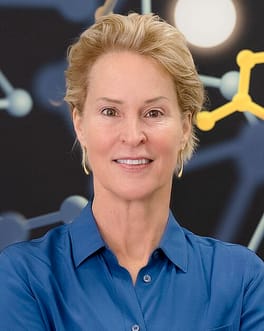
Photo: Christopher Michel / CC BY-SA 4.0 (source: Wikimedia Commons)
Frances Arnold, born on July 25, 1956 in Pittsburgh, Pennsylvania, United States, is a biochemist, inventor and university teacher. As of 2026, Frances Arnold is 70 years old. Education on record includes Taylor Allderdice High School and Princeton University. Recorded honors include National Medal of Technology and Innovation (2011), Charles Stark Draper Prize (2011), Millennium Technology Prize (2016) and 5 more.
My Take
Frances Arnold is one of those names I think more people should know. The 2018 Nobel Prize in Chemistry went to her for pioneering directed evolution, essentially letting nature's own trial-and-error redesign enzymes faster than any human could. What I admire is the sheer breadth of recognition behind it: the National Medal of Technology, the Draper Prize, the Millennium Technology Prize, induction into the National Inventors Hall of Fame. That's not luck, that's a career of reshaping a field. As the Linus Pauling Professor at Caltech, the Pittsburgh-born engineer turned a clever idea into a whole way of doing chemistry. Quietly revolutionary.
This take was written by generative AI, one per person, from publicly reported facts (editorial policy). It is a reading of the record, not reporting.
1. Profile
- Name (English)
- Frances Arnold
- Name (Japanese)
- フランシズ・アーノルド
- Reading
- ふらんしず・あーのるど
- Born
- July 25, 1956 (age 70)
- Origin
- Pittsburgh, Pennsylvania, United States
- Occupation
- biochemist / inventor / university teacher / engineer
- Zodiac / Chinese zodiac
- Leo / Monkey
2. Background
- High school
- Taylor Allderdice High School
- University
- Princeton University
Awards & achievements
- 2011 National Medal of Technology and Innovation
- 2011 Charles Stark Draper Prize
- 2016 Millennium Technology Prize
- 2005 Garvan–Olin Medal
- 2007 FASEB Excellence in Science Award
- 2014 National Inventors Hall of Fame
- 2018 Nobel Prize in Chemistry
- 2017 Raymond and Beverly Sackler Prize in Convergence Research
3. Links
- Official sitehttp://www.che.caltech.edu/faculty/arnold_f/index.html
- Xhttps://x.com/francesarnold
- Wikipedia (English)https://en.wikipedia.org/wiki/Frances%20Arnold
- Wikipedia (Japanese)https://ja.wikipedia.org/wiki/%E3%83%95%E3%83%A9%E3%83%B3%E3%82%B7%E3%82%B9%E3%83%BB%E3%82%A2%E3%83%BC%E3%83%8E%E3%83%AB%E3%83%89
- Wikidatahttps://www.wikidata.org/wiki/Q4273363
4. About this entry
Tags
- Last updated
Facts are limited to publicly available information up to 2024; non-public or unconfirmed items are omitted. English text is machine-assisted (facts translated by Sonnet, "My Take" written by Opus 4.8). The Japanese page is the source of record.
Frequently asked questions
When was Frances Arnold born?
Born July 25, 1956 (age 70).
Where is Frances Arnold from?
Frances Arnold is from Pittsburgh, Pennsylvania, United States.
What does Frances Arnold do?
Frances Arnold works as biochemist, inventor, university teacher, engineer.
Biochemist — see all → · Inventor — see all → · More people from the United States →