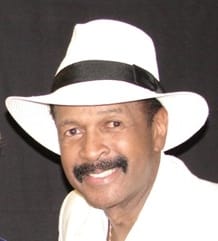
Photo: Kennystevens / CC BY-SA 3.0 (source: Wikimedia Commons)
Larry Graham was born in Beaumont, Texas, United States on August 14, 1946. Public records list Larry Graham as a singer, bassist and songwriter. That works out to 80 years old in 2026. Schooling on record includes Castlemont High School.
My Take
Larry Graham is genuinely one of the most influential musicians in funk history, and I don't think he gets nearly enough credit outside of bass-player circles. He practically invented the slap bass technique — that percussive, thumb-thumping style that defined funk and basically became the DNA of modern bass playing — while anchoring Sly and the Family Stone in the late 1960s and early 70s. Then he went ahead and formed Graham Central Station, proving he wasn't just a sideman but a frontman with serious star power. His 1980 hit "One in a Million You" showed off that smooth baritone voice and reached the top ten on the Billboard Hot 100, which is wild when you think about how versatile the man is. Prince was famously a close friend and collaborator, which tells you everything about the caliber of musician we're talking about. Pure legend.
This take was written by generative AI, one per person, from publicly reported facts (editorial policy). It is a reading of the record, not reporting.
1. Profile
- Name (English)
- Larry Graham
- Name (Japanese)
- ラリー・グラハム
- Reading
- らりー・ぐらはむ
- Born
- August 14, 1946 (age 80)
- Origin
- Beaumont, Texas, United States
- Occupation
- singer / bassist / songwriter / composer / musician
- Zodiac / Chinese zodiac
- Leo / Dog
2. Background
- High school
- Castlemont High School
3. Links
- Official sitehttps://www.larrygraham.com
- Wikipedia (English)https://en.wikipedia.org/wiki/Larry%20Graham
- Wikipedia (Japanese)https://ja.wikipedia.org/wiki/%E3%83%A9%E3%83%AA%E3%83%BC%E3%83%BB%E3%82%B0%E3%83%A9%E3%83%8F%E3%83%A0
- Wikidatahttps://www.wikidata.org/wiki/Q471032
4. About this entry
Tags
- Last updated
Only publicly available facts are listed; non-public or unconfirmed items are omitted. Base data was compiled from Wikidata from June 2026 onward; ages are recalculated daily and deaths are checked against Wikidata on an ongoing basis. English text is machine-assisted (facts translated by Sonnet, "My Take" written by Opus 4.8). The Japanese page is the source of record.
Frequently asked questions
When was Larry Graham born?
Larry Graham was born on August 14, 1946 and is 80 years old.
Where is Larry Graham from?
Larry Graham is from Beaumont, Texas, United States.
What does Larry Graham do?
Larry Graham works as singer, bassist, songwriter, composer, musician.
Which high school did Larry Graham attend?
Larry Graham attended Castlemont High School.
Singer — see all → · Bassist — see all → · More people from the United States → · More people born on August 14 →