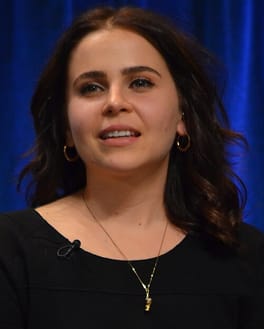
Photo: Genevieve / CC BY 2.0 (source: Wikimedia Commons)
Born on June 9, 1988, Mae Whitman is from Los Angeles, California, United States. Mae Whitman is listed as a film actor, television actor and voice actor. That works out to 38 years old in 2026. Notable works include Teenage Mutant Ninja Turtles.
My Take
What impresses me most about Mae Whitman is her quiet refusal to disappear. Child actors who appear in blockbusters like Independence Day usually flame out by twenty; she instead built a second, parallel career with her voice, becoming a fixture of animation including Teenage Mutant Ninja Turtles, while continuing to act on screen and even sing. That kind of versatility is not luck but a craftsperson's instinct for finding work that fits rather than work that flatters. I find her the rare Los Angeles native who treats acting like a trade to be honed over decades, not a lottery ticket. Give me that career over a meteor any day.
This take was written by generative AI, one per person, from publicly reported facts (editorial policy). It is a reading of the record, not reporting.
1. Profile
- Name (English)
- Mae Whitman
- Name (Japanese)
- メイ・ホイットマン
- Reading
- めい・ほいっとまん
- Born
- June 9, 1988 (age 38)
- Origin
- Los Angeles, California, United States
- Occupation
- actor / film actor / television actor / voice actor / singer
- Zodiac / Chinese zodiac
- Gemini / Dragon
2. Works & records
Filmography / notable works
| Category | Title |
|---|---|
| Notable work | Teenage Mutant Ninja Turtles |
3. Links
- Instagramhttps://www.instagram.com/mistergarf/
- Xhttps://x.com/maebirdwing
- Wikipedia (English)https://en.wikipedia.org/wiki/Mae%20Whitman
- Wikipedia (Japanese)https://ja.wikipedia.org/wiki/%E3%83%A1%E3%82%A4%E3%83%BB%E3%83%9B%E3%82%A4%E3%83%83%E3%83%88%E3%83%9E%E3%83%B3
- Wikidatahttps://www.wikidata.org/wiki/Q232307
4. About this entry
Tags
- Last updated
Facts are limited to publicly available information up to 2024; non-public or unconfirmed items are omitted. English text is machine-assisted (facts translated by Sonnet, "My Take" written by Opus 4.8). The Japanese page is the source of record.
Frequently asked questions
When was Mae Whitman born?
Born June 9, 1988 (age 38).
Where is Mae Whitman from?
Mae Whitman is from Los Angeles, California, United States.
What does Mae Whitman do?
Mae Whitman works as actor, film actor, television actor, voice actor, singer.
What is Mae Whitman known for?
Notable works include Teenage Mutant Ninja Turtles.
Actor — see all → · Film actor — see all → · More people from the United States →