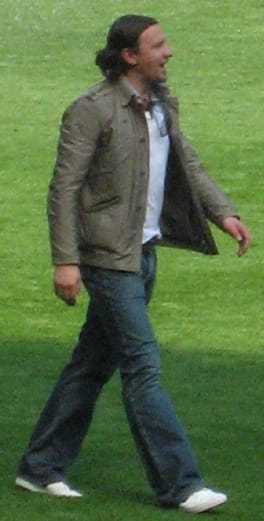
Photo: Mark Freeman from Hornchurch, UK / CC BY 2.0 (source: Wikimedia Commons)
Mario Stanić is an association football player and association football coach, born on April 10, 1972 in Sarajevo, Sarajevo Canton, Bosnia and Herzegovina. Mario Stanić is 54 years old as of 2026. The listed height is 187 cm.
My Take
Mario Stanic interests me as much for his geography as his game. Born in Sarajevo and starring for Croatia, his career is stitched through a region that lived genuine upheaval, and that context gives weight to everything he achieved. As a player he was the tactician's dream, equally credible at forward, attacking midfield, or wing-back, the sort of versatility coaches quietly treasure. That he transitioned into coaching, including assistant work at Shakhtar Donetsk, confirms my sense that he read the game intellectually, not just instinctively. I've always preferred the clever, adaptable footballer over the one-trick star, and Stanic feels like exactly that kind of durable, intelligent professional.
This take was written by generative AI, one per person, from publicly reported facts (editorial policy). It is a reading of the record, not reporting.
1. Profile
- Name (English)
- Mario Stanić
- Name (Japanese)
- マリオ・スタニッチ
- Reading
- まりお・すたにっち
- Born
- April 10, 1972 (age 54)
- Origin
- Sarajevo, Sarajevo Canton, Bosnia and Herzegovina
- Height
- 187 cm
- Occupation
- association football player / association football coach
- Zodiac / Chinese zodiac
- Aries / Rat
2. Links
3. About this entry
Tags
- Last updated
Facts are limited to publicly available information up to 2024; non-public or unconfirmed items are omitted. English text is machine-assisted (facts translated by Sonnet, "My Take" written by Opus 4.8). The Japanese page is the source of record.
Frequently asked questions
When was Mario Stanić born?
Born April 10, 1972 (age 54).
Where is Mario Stanić from?
Mario Stanić is from Sarajevo, Sarajevo Canton, Bosnia and Herzegovina.
What does Mario Stanić do?
Mario Stanić works as association football player, association football coach.
How tall is Mario Stanić?
Mario Stanić is 187 cm.
Association football player — see all → · Association football coach — see all → · More people from Bosnia and Herzegovina →