The Singer-Songwriting Housewife: How Mariya Takeuchi Sang Across Three Eras
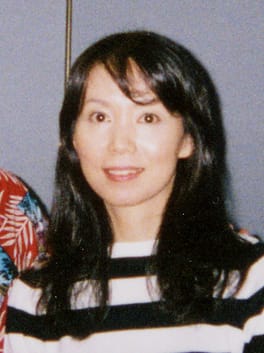
"Housewife" and "national artist." Two titles that, by all logic, should never meet—yet one woman reconciled them with apparent ease.
Her name is Mariya Takeuchi. While keeping house and raising a child, she set down, in the gaps between, songs like "Eki" (Station) and "Single Again" that have refused to leave the Japanese heart for decades. She rarely appears in public, never raises her voice. And yet her songs quietly move a mother born in the Showa era and a niece growing up in Reiwa to the very same melody. This is the story of a singer-songwriter who, through an aesthetic of subtraction, sang her way clear across three eras.
Born in a Storied Izumo Inn
Mariya Takeuchi was born on March 20, 1955, in Taisha, Hikawa District, Shimane Prefecture, now part of Izumo City. Her family ran a long-established inn called Takenoya Ryokan, and her father, Shigero Takeuchi, was its fourth-generation proprietor. Raised in the shadow of the great Izumo Shrine, in a household devoted to hospitality, she carries a kind of grounded composure.
After graduating from Shimane Prefectural Taisha High School, she entered Keio University to study English and American literature in the Faculty of Letters. Her fluency in English would later broaden the range of her music—though she ultimately withdrew from the university. What truly set her life in motion was not her studies, but a light-music club.
Scouted, Then a Rush of Newcomer Awards
While active in that light-music club, she was scouted after taking part in a compilation album. On November 25, 1978, she debuted on RCA/RVC with the single "Modotte Oide / Watashi no Jikan" and the album BEGINNING.
The following year, 1979, "SEPTEMBER" became a hit and she was suddenly the toast of the moment. The Ginza Music Festival Grand Prix, the Shinjuku Music Festival Gold Prize, the Japan Grand Prix for Popular Music Best New Artist Award, and Best New Artist at the 21st Japan Record Awards. Just one year after her debut, she swept nearly every newcomer prize there was—a brilliant start.
Marriage, a Pause, and the "Housewife" Nickname
In 1982 she married Tatsuro Yamashita. The union of two figures already carving their names into Japanese music history was an event in itself. Upon marrying, she temporarily suspended her public activities.
But only the public side stopped. In 1984 her first daughter was born, and even while devoting herself to childcare and the household, she kept composing. In time the public came to call her the "singer-songwriting housewife." It sounded almost like a joke, yet it was the highest of compliments—because from the very center of domestic life, songs that would move all of Japan kept emerging.
National Standards Made by a Housewife's Hand
At home, her pen never stopped. In 1982 she gave Naoko Kawai "Kenka wo Yamete," and in 1988 she wrote "Genki wo Dashite" for Hiroko Yakushimaru—producing not only her own songs but signature hits for other artists.
Her 1987 single "Eki" and her 1989 "Single Again" became major hits, and in 1990 she won both Best Pop Vocal Performance and the Lyric Writing Award at the 32nd Japan Record Awards. In 1994 her best album Impressions sold a staggering three million-plus copies. It was a result that made the phrase "in her spare time as a housewife" sound like a joke.
A Return After 18 Years, and Across Three Eras
In 2000 she held "souvenir," her first concerts in roughly eighteen years, at the Nippon Budokan and Osaka-jo Hall. Fans erupted at the return of an artist long absent from the stage. In 2014 she released the album TRAD, which won Best Album at the 56th Japan Record Awards, and she mounted "souvenir 2014," her first nationwide tour in thirty-three years.
Then, in 2019, her 40th-anniversary album Turntable reached number one on the Oricon chart. She became the first female artist ever to top Oricon across the Showa, Heisei, and Reiwa eras. That same year she received the Minister of Education, Culture, Sports, Science and Technology's Award for Fine Arts in the popular entertainment category. The woman who had kept singing so modestly had, somewhere along the way, become history itself.
An Aesthetic of Subtraction
Mariya Takeuchi's appeal lies not in addition but in subtraction. She never chased flashy exposure; with voice and song alone she has stood beside people's lives for decades. She favors plain white rice and simple apple pie, collects hats, and loves to travel—even her way of living is unadorned.
With her husband Tatsuro Yamashita, she is both spouse and musical partner. The sight of a couple who both loom so large in Japanese music history is, frankly, in a class of its own. Yet what is most remarkable about her is that she never proclaims that specialness aloud. Her songs are always there, drifting in to stand quietly beside someone's private emotional moment.
Those born in Showa and those growing up in Reiwa alike find themselves moved by the same songs. Mariya Takeuchi is that kind of quietly devastating presence.
Songs written from the very heart of domestic life keep sounding across three eras. The story of this singer-songwriter, who has stayed close to people's hearts through an aesthetic of subtraction, is not yet over. The next time summer comes and someone hums "Eki," that song will once again be standing, quietly, beside the life of someone new.