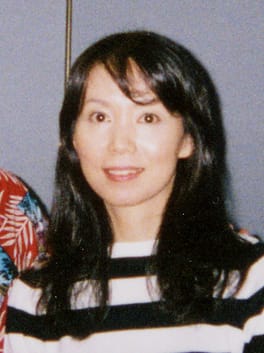
Photo: Kamasami Kong / CC0 (source: Wikimedia Commons)
My Take
I'm a little obsessed with how Mariya Takeuchi pulled off the quiet trick of being a "singer-songwriting housewife" while quietly writing some of the most permanent melodies in Japanese pop. She married Tatsuro Yamashita, stepped back to raise a family, and somehow kept handing the country songs like "Plastic Love" and "Single Again" that just refuse to leave your head. That city pop sound she helped define has aged into something timeless, getting rediscovered by a whole new generation online decades later. What gets me is the restraint: she rarely chased the spotlight, yet her voice has been showing up at people's quiet emotional moments for forty-plus years. Topping the charts across Showa, Heisei, and Reiwa eras isn't luck. It's craft so warm and unshowy you almost forget how rare it is. I adore that kind of subtraction.
This take was written by generative AI, one per person, from publicly reported facts (editorial policy). It is a reading of the record, not reporting.
Story
The Singer-Songwriting Housewife: How Mariya Takeuchi Sang Across Three Eras
Overview
Mariya Takeuchi (born March 20, 1955, in Taisha, Shimane Prefecture) is a Japanese singer-songwriter, lyricist, and composer who debuted in November 1978 on RCA/RVC with the single "Modotte Oide / Watashi no Jikan" and the album BEGINNING after being scouted while active in a light-music club at Keio University. She is married to fellow musician Tatsuro Yamashita and became widely known by the nickname "singer-songwriter housewife," balancing domestic life with a steady output of acclaimed recordings. In 2019 she became the first female artist to reach number one on the Oricon charts across the Showa, Heisei, and Reiwa eras, and that same year received the Minister of Education, Culture, Sports, Science and Technology's Award for Fine Arts in the popular entertainment category.
1. Profile
- Name (English)
- Mariya Takeuchi
- Name (Japanese)
- 山下まりや
- Reading
- やました まりや
- Born
- March 20, 1955 (age 71)
- Origin
- Taisha, Hikawa District, Shimane Prefecture, Japan (present-day Taisha, Izumo City)
- Occupation
- Singer-songwriter / Lyricist / Composer / Music producer
- Zodiac / Chinese zodiac
- Pisces / Goat
- Blood type
- A
- Agency
- Smile Company
- Agency history
- RCA/RVC (1978–1982)
MOON RECORDS (1982–2002) - Active years
- 1978–present
2. Background
- High school
- Shimane Prefectural Taisha High School
- University
- Keio University, Faculty of Letters, Department of English and American Literature (withdrew)
- Debut
- November 25, 1978 — debuted on RCA/RVC with the single "Modotte Oide / Watashi no Jikan" and the album BEGINNING. She was scouted while participating in a light-music club at Keio University, which led to her inclusion on a compilation album.
Awards & achievements
- 1979 — Ginza Music Festival Grand Prix
- 1979 — Shinjuku Music Festival Gold Prize
- 1979 — Japan Grand Prix for Popular Music Best New Artist Award
- 1979 — 21st Japan Record Awards Best New Artist
- 1990 — 32nd Japan Record Awards Best Pop Vocal Performance
- 1990 — 32nd Japan Record Awards Lyric Writing Award
- 2014 — 56th Japan Record Awards Best Album (TRAD)
- 2019 — Minister of Education, Culture, Sports, Science and Technology's Award for Fine Arts (Popular Entertainment)
- 2019 — 61st Japan Record Awards Special Award
Timeline
- 1978Debuted with single "Modotte Oide / Watashi no Jikan" and album BEGINNING
- 1979"SEPTEMBER" became a hit; won Best New Artist at the 21st Japan Record Awards
- 1982Married Tatsuro Yamashita; temporarily suspended public activities
- 1984First daughter born; continued composing while devoted to childcare and household duties
- 1989"Single Again" became a major hit
- 1994Best album Impressions sold over three million copies
- 2000First live concerts in approximately 18 years, "souvenir," held at Nippon Budokan and Osaka-jo Hall
- 2014Released album TRAD; conducted first nationwide tour in 33 years, "souvenir 2014"
- 201940th-anniversary album Turntable reached number one on Oricon; became the first female artist to top Oricon across the Showa, Heisei, and Reiwa eras
- 2019Received the Minister of Education, Culture, Sports, Science and Technology's Award for Fine Arts (Popular Entertainment)
3. Relationships
- Spouse
- Tatsuro Yamashita (married 1982)
- Children
- One daughter (publicly acknowledged)
- Parents
- Father: Shigero Takeuchi (4th-generation proprietor of the long-established Takenoya Ryokan inn)
4. Personality
Hobbies
- Travel
- Hat collecting
Specialties
- Lyric writing
- Composition
- English
5. Works & records
Works summary
- Appearances
- 263 (1978–2026)
- By year
- 1978: 5, 1979: 20, 1980: 11, 1981: 6, 1982: 1, 1984: 4, 1985: 3, 1986: 3, 1987: 3, 1988: 1, 1989: 1, 1990: 3, 1992: 3, 1993: 1, 1994: 4, 1995: 1, 1996: 1, 1998: 1, 1999: 1, 2000: 1, 2001: 4, 2003: 1, 2006: 2, 2007: 4, 2008: 5, 2010: 1, 2013: 4, 2014: 3, 2016: 2, 2018: 1, 2019: 7, 2020: 2, 2021: 2, 2022: 1, 2023: 1, 2024: 8, 2025: 1, 2026: 1
- Main labels/studios
- 配信限定 (4)
- Debut work
- 戻っておいで・私の時間
Filmography / notable works
| Category | Title | Role | Year |
|---|---|---|---|
| Album | BEGINNING | Artist | 1978 |
| Single | SEPTEMBER | Artist | 1979 |
| Single | Eki (Station) | Lyricist / Composer / Artist | 1987 |
| Single | Single Again | Artist | 1989 |
| Single | Jun'ai Rhapsody | Artist | 1994 |
| Album | Impressions | Artist (Best Album) | 1994 |
| Song contribution | Kenka wo Yamete (for Naoko Kawai) | Lyricist / Composer | 1982 |
| Song contribution | Genki wo Dashite (for Hiroko Yakushimaru) | Lyricist / Composer | 1988 |
| Album | TRAD | Artist | 2014 |
| Album | Turntable | Artist (40th Anniversary) | 2019 |
6. Links
- Official sitehttps://www.mariyat.co.jp/
- Xhttps://x.com/mariya45th
- Wikipedia (Japanese)https://ja.wikipedia.org/wiki/%E7%AB%B9%E5%86%85%E3%81%BE%E3%82%8A%E3%82%84
- Wikidatahttps://www.wikidata.org/wiki/Q1143704
7. About this entry
Tags
- Last updated
Facts are limited to publicly available information up to 2024; non-public or unconfirmed items are omitted. Works and profile fields sourced from Wikipedia reflect content as of 2026-08-26. English text is machine-assisted (facts translated by Sonnet, "My Take" written by Opus 4.8). The Japanese page is the source of record.
Frequently asked questions
When was Mariya Takeuchi born?
Born March 20, 1955 (age 71).
Where is Mariya Takeuchi from?
Mariya Takeuchi is from Taisha, Hikawa District, Shimane Prefecture, Japan (present-day Taisha, Izumo City).
What does Mariya Takeuchi do?
Mariya Takeuchi works as Singer-songwriter, Lyricist, Composer, Music producer.
What is Mariya Takeuchi's blood type?
A.
What agency is Mariya Takeuchi with?
Mariya Takeuchi is with Smile Company.
How long has Mariya Takeuchi been active?
1978–present.
What is Mariya Takeuchi known for?
Notable works include BEGINNING, SEPTEMBER, Eki (Station).