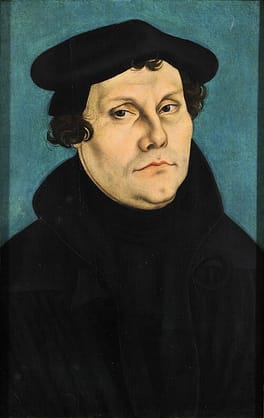
Photo: Lucas Cranach the Elder / Public domain (source: Wikimedia Commons)
Public records list Martin Luther as a theologian, lawyer and Bible translator. Martin Luther was born on November 10, 1483 in Eisleben, Saxony-Anhalt, Germany. Death is recorded on February 18, 1546, at the age of 62. Education on record includes University of Erfurt (1392-1816). Notable works include Ninety-five Theses and Luther Bible.
My Take
Honestly, few people in all of recorded history have shaken the world as hard as Martin Luther — a German monk who, in 1517, nailed a list of grievances to a church door and somehow managed to crack Western Christianity in two. What gets me is that he wasn't just a rebel; the guy was a genuine scholar who translated the entire Bible into German, practically inventing a standardized written German in the process. His Ninety-Five Theses read less like a polite complaint and more like a man who had hit his absolute limit with institutional corruption. He was excommunicated, declared an outlaw, and still wouldn't back down. That stubborn streak, combined with serious intellectual firepower, made him one of the most consequential people who ever lived — love him or not.
This take was written by generative AI, one per person, from publicly reported facts (editorial policy). It is a reading of the record, not reporting.
1. Profile
- Name (English)
- Martin Luther
- Name (Japanese)
- マルティン・ルター
- Reading
- まるてぃん・るたー
- Born
- November 10, 1483 – February 18, 1546
- Origin
- Eisleben, Saxony-Anhalt, Germany
- Occupation
- translator / theologian / lawyer / Bible translator / hymnwriter
- Zodiac / Chinese zodiac
- Scorpio / Rabbit
2. Background
- University
- University of Erfurt (1392-1816)
3. Works & records
Filmography / notable works
| Category | Title |
|---|---|
| Notable work | Ninety-five Theses |
| Notable work | Luther Bible |
4. Links
5. About this entry
Tags
- Last updated
Facts are limited to publicly available information up to 2024; non-public or unconfirmed items are omitted. English text is machine-assisted (facts translated by Sonnet, "My Take" written by Opus 4.8). The Japanese page is the source of record.
Frequently asked questions
When was Martin Luther born?
Born November 10, 1483.
When did Martin Luther die?
Died February 18, 1546, aged 62.
Where was Martin Luther from?
Martin Luther was from Eisleben, Saxony-Anhalt, Germany.
What did Martin Luther do?
Martin Luther worked as translator, theologian, lawyer, Bible translator, hymnwriter.
What was Martin Luther known for?
Notable works include Ninety-five Theses, Luther Bible.
Translator — see all → · Theologian — see all → · More people from Germany →