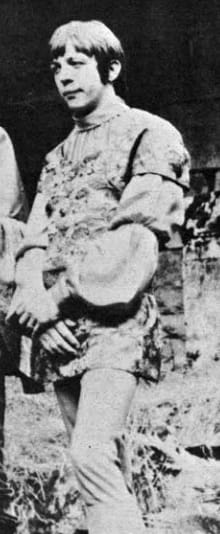
Photo: KRLA Beat/Beat Publications, Inc. / Public domain (source: Wikimedia Commons)
Matthew Fisher is an organist, composer and pianist, born on March 7, 1946 in Addiscombe, United Kingdom. Matthew Fisher is 80 years old as of 2026. Education on record includes Wolfson College.
My Take
Matthew Fisher will always be tied to one of the most recognizable sounds in pop history: that Hammond organ line on Procol Harum's "A Whiter Shade of Pale" in 1967. What I find remarkable is that he eventually won a songwriting credit for it, decades later, which is a rare and hard-fought outcome in the music business and tells you he believed in his contribution. Then there's the twist that grabs me most: he later qualified at Cambridge and became a computer programmer. I love a creative mind that quietly reinvents itself into something so different. That second act makes him far more interesting than a one-song footnote.
This take was written by generative AI, one per person, from publicly reported facts (editorial policy). It is a reading of the record, not reporting.
1. Profile
- Name (English)
- Matthew Fisher
- Name (Japanese)
- マシュー・フィッシャー
- Reading
- ましゅー・ふぃっしゃー
- Born
- March 7, 1946 (age 80)
- Origin
- Addiscombe, United Kingdom
- Occupation
- organist / composer / pianist / songwriter / artist
- Zodiac / Chinese zodiac
- Pisces / Dog
2. Background
- University
- Wolfson College
3. Links
- Official sitehttps://matthewfisher.com/
- Wikipedia (English)https://en.wikipedia.org/wiki/Matthew%20Fisher%20(musician)
- Wikipedia (Japanese)https://ja.wikipedia.org/wiki/%E3%83%9E%E3%82%B7%E3%83%A5%E3%83%BC%E3%83%BB%E3%83%95%E3%82%A3%E3%83%83%E3%82%B7%E3%83%A3%E3%83%BC
- Wikidatahttps://www.wikidata.org/wiki/Q1350421
4. About this entry
Tags
- Last updated
Facts are limited to publicly available information up to 2024; non-public or unconfirmed items are omitted. English text is machine-assisted (facts translated by Sonnet, "My Take" written by Opus 4.8). The Japanese page is the source of record.
Frequently asked questions
When was Matthew Fisher born?
Born March 7, 1946 (age 80).
Where is Matthew Fisher from?
Matthew Fisher is from Addiscombe, United Kingdom.
What does Matthew Fisher do?
Matthew Fisher works as organist, composer, pianist, songwriter, artist.
Organist — see all → · Composer — see all → · More people from the United Kingdom →