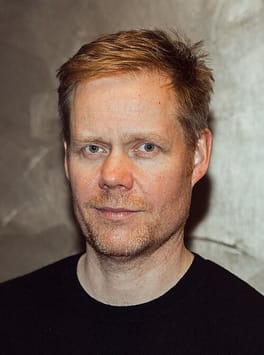
Photo: Henry W. Laurisch / CC BY-SA 3.0 (source: Wikimedia Commons)
Max Richter is a pianist and film score composer. Born on March 22, 1966, Max Richter is from Hamelin, Lower Saxony, Germany. That works out to 60 years old in 2026. Schooling on record includes University of Edinburgh. Awards on record include European Film Award for Best Composer (2008), Echo Klassik – Classical Music without Borders (2013) and Commander of the Order of the British Empire.
My Take
Max Richter is one of those rare composers who makes you feel like you've been quietly asleep your whole life and his music is what waking up actually sounds like. Born in Hamelin — yes, the Pied Piper town — and classically trained at Edinburgh and the Royal Academy before studying under Luciano Berio in Italy, he's got pedigree stacked on pedigree, yet his work never feels academic or cold. His recomposition of Vivaldi's Four Seasons is genuinely one of the boldest moves in contemporary classical music, and Sleep — an eight-hour piece designed to be listened to while unconscious — is either the most ambitious or most absurd project of the last few decades, and I mean that as the highest compliment. He won a European Film Award in 2008 and later a CBE, but the real metric is that his music shows up everywhere from HBO dramas to art installations and it always lands exactly right. I'm completely sold.
This take was written by generative AI, one per person, from publicly reported facts (editorial policy). It is a reading of the record, not reporting.
1. Profile
- Name (English)
- Max Richter
- Name (Japanese)
- マックス・リヒター
- Reading
- まっくす・りひたー
- Born
- March 22, 1966 (age 60)
- Origin
- Hamelin, Lower Saxony, Germany
- Occupation
- composer / pianist / film score composer
- Zodiac / Chinese zodiac
- Aries / Horse
2. Background
- University
- University of Edinburgh
Awards & achievements
- 2008 European Film Award for Best Composer
- 2013 Echo Klassik – Classical Music without Borders
- Commander of the Order of the British Empire
3. Links
- Official sitehttps://www.maxrichtermusic.com/
- Instagramhttps://www.instagram.com/maxrichtermusic/
- Xhttps://x.com/maxrichtermusic
- Wikipedia (English)https://en.wikipedia.org/wiki/Max%20Richter
- Wikipedia (Japanese)https://ja.wikipedia.org/wiki/%E3%83%9E%E3%83%83%E3%82%AF%E3%82%B9%E3%83%BB%E3%83%AA%E3%83%92%E3%82%BF%E3%83%BC
- Wikidatahttps://www.wikidata.org/wiki/Q714325
4. About this entry
Tags
- Last updated
Only publicly available facts are listed; non-public or unconfirmed items are omitted. Base data was compiled from Wikidata from June 2026 onward; ages are recalculated daily and deaths are checked against Wikidata on an ongoing basis. English text is machine-assisted (facts translated by Sonnet, "My Take" written by Opus 4.8). The Japanese page is the source of record.
Frequently asked questions
When was Max Richter born?
Max Richter was born on March 22, 1966 and is 60 years old.
Where is Max Richter from?
Max Richter is from Hamelin, Lower Saxony, Germany.
What does Max Richter do?
Max Richter works as composer, pianist, film score composer.
Where did Max Richter study?
Max Richter attended University of Edinburgh.
Composer — see all → · Pianist — see all → · More people from Germany → · More people born on March 22 →