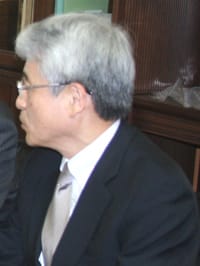
Photo: 金融庁 / CC BY 4.0 (source: Wikimedia Commons)
My Take
Born in Nagasaki in 1949 and sharp enough to make it to Kyoto University — one of Japan's most competitive schools — Michio Yoneda is the kind of figure who operated quietly while the rest of the world was making noise. He came of age right in the thick of Japan's postwar economic boom and the campus unrest of the late '60s, so you have to imagine that era left some kind of mark on how he thought about building things. He joined the Bank of Japan in 1974, rose to lead the Osaka Securities Exchange from 2003, and went on to become chief operating officer of the Japan Exchange Group, the kind of steady institutional career I respect.
This take was written by generative AI, one per person, from publicly reported facts (editorial policy). It is a reading of the record, not reporting.
Overview
Michio Yoneda is a Japanese businessman born on June 14, 1949, in Nagasaki City, Nagasaki Prefecture. He graduated from Kyoto University, one of Japan's most prestigious national universities. After a career at the Bank of Japan, he became president of the Osaka Securities Exchange in 2003 and later served as chief operating officer of the Japan Exchange Group.
1. Profile
- Name (English)
- Michio Yoneda
- Name (Japanese)
- 米田道生
- Reading
- よねだ みちお
- Born
- June 14, 1949 (age 77)
- Origin
- Nagasaki City, Nagasaki Prefecture, Japan
- Occupation
- Businessman
- Zodiac / Chinese zodiac
- Gemini / Ox
2. Background
- University
- Kyoto University
3. Links
- Wikipedia (Japanese)https://ja.wikipedia.org/wiki/%E7%B1%B3%E7%94%B0%E9%81%93%E7%94%9F
- Wikidatahttps://www.wikidata.org/wiki/Q21703061
4. About this entry
Tags
- Last updated
Only publicly available facts are listed; non-public or unconfirmed items are omitted. Base data was compiled from Wikidata from June 2026 onward; ages are recalculated daily and deaths are checked against Wikidata on an ongoing basis. English text is machine-assisted (facts translated by Sonnet, "My Take" written by Opus 4.8). The Japanese page is the source of record.
Frequently asked questions
When was Michio Yoneda born?
Michio Yoneda was born on June 14, 1949 and is 77 years old.
Where is Michio Yoneda from?
Michio Yoneda is from Nagasaki City, Nagasaki Prefecture, Japan.
What does Michio Yoneda do?
Michio Yoneda works as Businessman.
Where did Michio Yoneda study?
Michio Yoneda attended Kyoto University.
Businessman — see all → · More people from Japan → · More people born on June 14 →