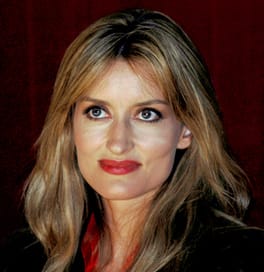
Photo: Eleanore Studer / CC BY-SA 3.0 (source: Wikimedia Commons)
Born on December 14, 1971, Natascha McElhone is from Walton-on-Thames, United Kingdom. Natascha McElhone is an autobiographer, stage actor and film actor. That works out to 54 years old in 2026.
My Take
Natascha McElhone is, to my mind, one of cinema's great quiet weapons. Filmmakers keep casting her the same way: as the face of a mystery the protagonist cannot quite solve. In The Truman Show and Solaris she plays women who are more idea than person, and she makes that nearly impossible job look effortless. I admire that she built a roughly thirty-year career on stage-trained craft rather than tabloid noise. The autobiographer credit in her file does not surprise me either; she has always seemed like an actor whose inner life exceeds her roles. There is an intelligence behind her eyes that the camera trusts instinctively, and so do I.
This take was written by generative AI, one per person, from publicly reported facts (editorial policy). It is a reading of the record, not reporting.
1. Profile
- Name (English)
- Natascha McElhone
- Name (Japanese)
- ナターシャ・マケルホーン
- Reading
- なたーしゃ・まけるほーん
- Born
- December 14, 1971 (age 54)
- Origin
- Walton-on-Thames, United Kingdom
- Occupation
- actor / autobiographer / stage actor / film actor
- Zodiac / Chinese zodiac
- Sagittarius / Boar
2. Links
- Xhttps://x.com/nataschaandsons
- Wikipedia (English)https://en.wikipedia.org/wiki/Natascha%20McElhone
- Wikipedia (Japanese)https://ja.wikipedia.org/wiki/%E3%83%8A%E3%82%BF%E3%83%BC%E3%82%B7%E3%83%A3%E3%83%BB%E3%83%9E%E3%82%B1%E3%83%AB%E3%83%9B%E3%83%BC%E3%83%B3
- Wikidatahttps://www.wikidata.org/wiki/Q229237
3. About this entry
Tags
- Last updated
Facts are limited to publicly available information up to 2024; non-public or unconfirmed items are omitted. English text is machine-assisted (facts translated by Sonnet, "My Take" written by Opus 4.8). The Japanese page is the source of record.
Frequently asked questions
When was Natascha McElhone born?
Born December 14, 1971 (age 54).
Where is Natascha McElhone from?
Natascha McElhone is from Walton-on-Thames, United Kingdom.
What does Natascha McElhone do?
Natascha McElhone works as actor, autobiographer, stage actor, film actor.
Actor — see all → · Autobiographer — see all → · More people from the United Kingdom →