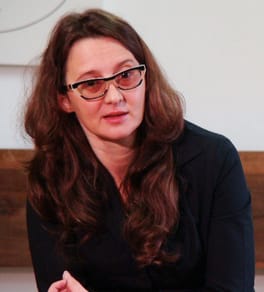
Photo: Gabriel Marchi from São Paulo, Brasil / CC BY 2.0 (source: Wikimedia Commons)
Lucrecia Martel, born on December 14, 1966 in Salta, Salta Province, Argentina, is a film director, screenwriter and film producer. Lucrecia Martel is 59 years old as of 2026. Education on record includes University of Buenos Aires. Listed accolades include honorary doctor of the Katholieke Universiteit Leuven (2023) and Honorary Doctorate of University of Buenos Aires (2023). Notable works include The Salta Trilogy, Zama and La Ciénaga.
My Take
What draws me to Lucrecia Martel is her refusal to play the volume game. From a quiet town in Salta she built a cinema of humidity, dread, and unspoken tension that lingers under your skin long after the credits. The Salta Trilogy and Zama are not films you consume; they are atmospheres you survive. In an industry addicted to output, her deliberate slowness feels almost defiant, and I respect that immensely. Two honorary doctorates and a permanent seat at Cannes and Venice confirm it. She trusts the audience to feel rather than be told, which is exactly why she matters to me.
This take was written by generative AI, one per person, from publicly reported facts (editorial policy). It is a reading of the record, not reporting.
1. Profile
- Name (English)
- Lucrecia Martel
- Name (Japanese)
- ルクレシア・マルテル
- Reading
- るくれしあ・まるてる
- Born
- December 14, 1966 (age 59)
- Origin
- Salta, Salta Province, Argentina
- Occupation
- film director / screenwriter / film producer
- Zodiac / Chinese zodiac
- Sagittarius / Horse
2. Background
- University
- University of Buenos Aires
Awards & achievements
- 2023 honorary doctor of the Katholieke Universiteit Leuven
- 2023 Honorary Doctorate of University of Buenos Aires
3. Works & records
Filmography / notable works
| Category | Title |
|---|---|
| Notable work | The Salta Trilogy |
| Notable work | Zama |
| Notable work | La Ciénaga |
| Notable work | The Holy Girl |
4. Links
5. About this entry
Tags
- Last updated
Facts are limited to publicly available information up to 2024; non-public or unconfirmed items are omitted. English text is machine-assisted (facts translated by Sonnet, "My Take" written by Opus 4.8). The Japanese page is the source of record.
Frequently asked questions
When was Lucrecia Martel born?
Born December 14, 1966 (age 59).
Where is Lucrecia Martel from?
Lucrecia Martel is from Salta, Salta Province, Argentina.
What does Lucrecia Martel do?
Lucrecia Martel works as film director, screenwriter, film producer.
What is Lucrecia Martel known for?
Notable works include The Salta Trilogy, Zama, La Ciénaga.
Film director — see all → · Screenwriter — see all → · More people from Argentina →