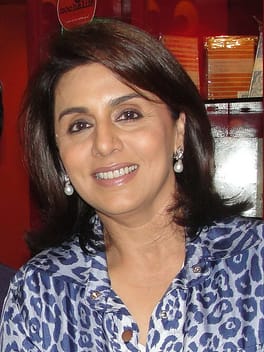
Photo: NeetuSinghBigBadaBoom.jpg: Indiapuppet derivative work: Puramyun31 / CC BY-SA 3.0 (source: Wikimedia Commons)
Neetu Kapoor is an actor, born on July 8, 1958 in Delhi, India. Neetu Kapoor is 68 years old as of 2026. Education on record includes Hill Grange High School.
My Take
Neetu Kapoor represents a kind of effortless screen charm that Hindi cinema rarely produces anymore. She carried films through the late sixties, seventies, and early eighties while still remarkably young, and the fact that Mumbai honored her on the Walk of the Stars in 2012 shows how durable that affection remains. What I find most compelling is her longevity as a beloved public figure; decades after her peak era, audiences still light up at her name. Two Filmfare nominations only hint at her impact, because her real legacy is the warmth she brings to every frame. To me she is proof that grace ages better than glamour.
This take was written by generative AI, one per person, from publicly reported facts (editorial policy). It is a reading of the record, not reporting.
1. Profile
- Name (English)
- Neetu Kapoor
- Name (Japanese)
- ニートゥー・カプール
- Reading
- にーとぅー・かぷーる
- Born
- July 8, 1958 (age 68)
- Origin
- Delhi, India
- Occupation
- actor
- Zodiac / Chinese zodiac
- Cancer / Dog
2. Background
- High school
- Hill Grange High School
3. Links
- Instagramhttps://www.instagram.com/neetu54/
- Wikipedia (English)https://en.wikipedia.org/wiki/Neetu%20Kapoor
- Wikidatahttps://www.wikidata.org/wiki/Q12069158
4. About this entry
Tags
- Last updated
Facts are limited to publicly available information up to 2024; non-public or unconfirmed items are omitted. English text is machine-assisted (facts translated by Sonnet, "My Take" written by Opus 4.8). The Japanese page is the source of record.
Frequently asked questions
When was Neetu Kapoor born?
Neetu Kapoor was born on July 8, 1958 and is 68 years old.
Where is Neetu Kapoor from?
Neetu Kapoor is from Delhi, India.
What does Neetu Kapoor do?
Neetu Kapoor works as actor.
Which high school did Neetu Kapoor attend?
Neetu Kapoor attended Hill Grange High School.