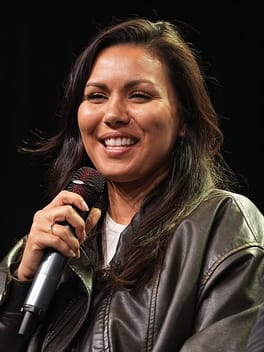
Photo: John Manard @wanderingdorkphotography for Super Festivals from Ft. Lauderdale, USA / CC BY 2.0 (source: Wikimedia Commons)
Olivia Olson is credited as a singer-songwriter, television actor and film actor. Born on May 21, 1992, Olivia Olson is from Los Angeles, California, United States. That works out to 34 years old in 2026. Education on record includes Agoura High School.
My Take
Olivia Olson is proof that some of the most beloved performances are ones you hear rather than see. To a generation she is Marceline the Vampire Queen from Adventure Time and Vanessa in Phineas and Ferb, voice roles that demanded real singing chops, not just acting. Yet I always come back to her as young Joanna belting out in Love Actually, a performance so polished the filmmakers reportedly toned it down because it seemed too professional for a child. That early spark clearly wasn't a fluke. She's a Los Angeles native who turned a precocious voice into a durable, genuinely musical career.
This take was written by generative AI, one per person, from publicly reported facts (editorial policy). It is a reading of the record, not reporting.
1. Profile
- Name (English)
- Olivia Olson
- Name (Japanese)
- オリヴィア・オルソン
- Reading
- おりゔぃあ・おるそん
- Born
- May 21, 1992 (age 34)
- Origin
- Los Angeles, California, United States
- Occupation
- actor / singer-songwriter / television actor / film actor / singer
- Zodiac / Chinese zodiac
- Gemini / Monkey
2. Background
- High school
- Agoura High School
3. Links
- Instagramhttps://www.instagram.com/oliviaroseolson/
- Xhttps://x.com/oliveolson
- Wikipedia (English)https://en.wikipedia.org/wiki/Olivia%20Olson
- Wikipedia (Japanese)https://ja.wikipedia.org/wiki/%E3%82%AA%E3%83%AA%E3%83%B4%E3%82%A3%E3%82%A2%E3%83%BB%E3%82%AA%E3%83%AB%E3%82%BD%E3%83%B3
- Wikidatahttps://www.wikidata.org/wiki/Q260331
4. About this entry
Tags
- Last updated
Facts are limited to publicly available information up to 2024; non-public or unconfirmed items are omitted. English text is machine-assisted (facts translated by Sonnet, "My Take" written by Opus 4.8). The Japanese page is the source of record.
Frequently asked questions
When was Olivia Olson born?
Born May 21, 1992 (age 34).
Where is Olivia Olson from?
Olivia Olson is from Los Angeles, California, United States.
What does Olivia Olson do?
Olivia Olson works as actor, singer-songwriter, television actor, film actor, singer.
Actor — see all → · Singer-songwriter — see all → · More people from the United States →