The Boy Who Was Supposed to Be a Doctor: How Osamu Tezuka Became the God of Manga
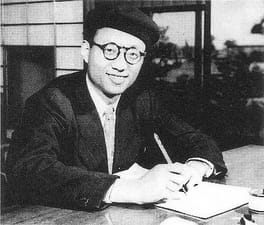
In twentieth-century Japan, there lived a man who accomplished far more than one lifetime should reasonably allow. Osamu Tezuka was a manga artist, an animator, an anime director, and a genuine doctor of medicine. Astro Boy, Black Jack, Phoenix, Jungle Emperor Leo: any single one of these would have been a career, and he created them all.
He is revered as the "God of Manga," yet his origins were surprisingly, endearingly human. He loved insects, idolized Walt Disney, fought against deadlines, and burned with jealousy whenever a younger artist scored a hit. Beneath the divine title lived a boy made entirely of curiosity. Born in Toyonaka, Osaka, in 1928 and gone by 1989 at just sixty, Tezuka left fingerprints on Japanese manga and animation that still mark creative work around the world today.
An Insect-Loving Boy Under the Takarazuka Sky
Osamu Tezuka was born on November 3, 1928, in Toyonaka, Osaka. When he was five, his family moved to Kohama Village in Hyogo, present-day Takarazuka. A place where the glittering Takarazuka Revue theater coexisted with lush rural hills, it became the formative landscape behind much of his later work.
As a boy, Tezuka was obsessed with insects. He loved them so much that he added the character for "insect" to his given name, turning Osamu into the pen name we know. Insect collecting, watching films, astronomy: his bottomless curiosity remained the fuel of his creativity for the rest of his life.
A Manga Artist in a White Coat
In 1946, Tezuka made his debut by serializing "Maa-chan's Diary" in the Mainichi Elementary School Newspaper. His 1947 book New Treasure Island became an explosive bestseller, captivating the children of postwar Japan. His bold, cinematic technique of moving panels and shifting viewpoints rewrote the conventions of what manga could be.
Astonishingly, he was walking an entirely different road at the same time. In 1951 he graduated from Osaka University's medical college; he earned his medical license in 1953 and a doctorate in medicine in 1961. While one hand enchanted readers, the other confronted the human body and the meaning of life. That constant crossing between two worlds would later give works like Black Jack their profound authority.
The Day Astro Boy Took Flight
Tezuka's ambition refused to stay on the page. In 1961 he founded his own animation studio, Mushi Production. Just as his hero Walt Disney had done, he wanted to make his characters move, give them voices, and breathe life into them.
In 1963 that dream became Astro Boy, Japan's first 30-minute television anime series, a venture that bordered on reckless for its time. Astro Boy became a hero in living rooms across the country, and Japan's animation industry truly began its run from here. In 1967, Jungle Emperor Leo won the Silver Lion of St. Mark at the Venice International Film Festival, carrying his vision across borders.
The Humanity of a God
Tezuka's work only deepened as he aged. Black Jack, begun in 1973, used a brilliant unlicensed surgeon to weigh the value of life, showcasing the gifts of an author who was himself a doctor of medicine. In his lifelong masterwork Phoenix, he wrestled with the grand themes of life, death, and reincarnation, while Adolf ni Tsugu confronted war and human cruelty. From The Three-Eyed One to In the Sun, his pen moved freely between work for children and work for adults.
Yet for all his stature, Tezuka was no serene saint. He nearly missed deadlines and tormented his assistants, and he genuinely seethed when younger colleagues outsold him. And he wasted almost nothing of his life.
On February 9, 1989, Osamu Tezuka died of stomach cancer at Hanzomon Hospital in Tokyo, at the age of sixty. Each time he woke from a coma he asked for a pencil, and his last words are said to have been "Please, let me work" — a detail that captures everything about how he lived.
One man drew manga, built anime, and mastered medicine. Considering the volume and quality of what he left behind, no amount of gratitude feels sufficient. The grammar of expression Tezuka built is still used, as a matter of course, by creators around the world. The God of Manga was, indeed, right here among us.