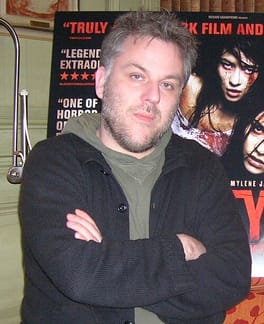
Photo: Matthew Turner / CC BY-SA 2.0 (source: Wikimedia Commons)
Pascal Laugier was born on October 16, 1971 in Vallauris, Alpes-Maritimes, France. Pascal Laugier is a screenwriter and film director. That works out to 55 years old in 2026. Notable works include Ghostland, Martyrs and The Tall Man.
My Take
What I admire most about Pascal Laugier is his refusal to flinch. Born in sunny Vallauris on the French Riviera, he instead makes films that stare directly into human suffering, with Martyrs being one of the most uncompromising horror works of its era. Ghostland and The Tall Man show the same fearless gaze, treating dread as a vehicle for grief and loss rather than cheap thrills. To me, he is less a scaremonger than a serious craftsman testing how much truth an audience can bear. That stubborn integrity is exactly why his name stays with me long after the credits roll.
This take was written by generative AI, one per person, from publicly reported facts (editorial policy). It is a reading of the record, not reporting.
1. Profile
- Name (English)
- Pascal Laugier
- Name (Japanese)
- パスカル・ロジェ (映画監督)
- Reading
- ぱすかる・ろじぇ
- Born
- October 16, 1971 (age 55)
- Origin
- Vallauris, Alpes-Maritimes, France
- Occupation
- screenwriter / film director / director
- Zodiac / Chinese zodiac
- Libra / Boar
2. Works & records
Filmography / notable works
| Category | Title |
|---|---|
| Notable work | Ghostland |
| Notable work | Martyrs |
| Notable work | The Tall Man |
3. Links
4. About this entry
Tags
- Last updated
Facts are limited to publicly available information up to 2024; non-public or unconfirmed items are omitted. English text is machine-assisted (facts translated by Sonnet, "My Take" written by Opus 4.8). The Japanese page is the source of record.
Frequently asked questions
When was Pascal Laugier born?
Pascal Laugier was born on October 16, 1971 and is 55 years old.
Where is Pascal Laugier from?
Pascal Laugier is from Vallauris, Alpes-Maritimes, France.
What does Pascal Laugier do?
Pascal Laugier works as screenwriter, film director, director.
What is Pascal Laugier known for?
Pascal Laugier's notable works include Ghostland, Martyrs, The Tall Man.
Screenwriter — see all → · Film director — see all → · More people from France → · More people born on October 16 →